Auto Electrical Repair
AUTO ELECTRICAL REPAIR in Pomona, CA
A parasitic draw that empties a battery overnight usually measures between 20 and 50 milliamps once a vehicle has gone to sleep, which is far too small to find by eye. M & A Auto Care handles auto electrical repair in Pomona, CA: alternator and charging system diagnostics, starter and starting circuit testing, parasitic draw hunting, grounds, wiring, fuses, and relays, and power accessories that quit without warning. Every finding gets explained before any work is approved, and estimates are free.
ELECTRICAL FAULTS RARELY ANNOUNCE THEMSELVES.
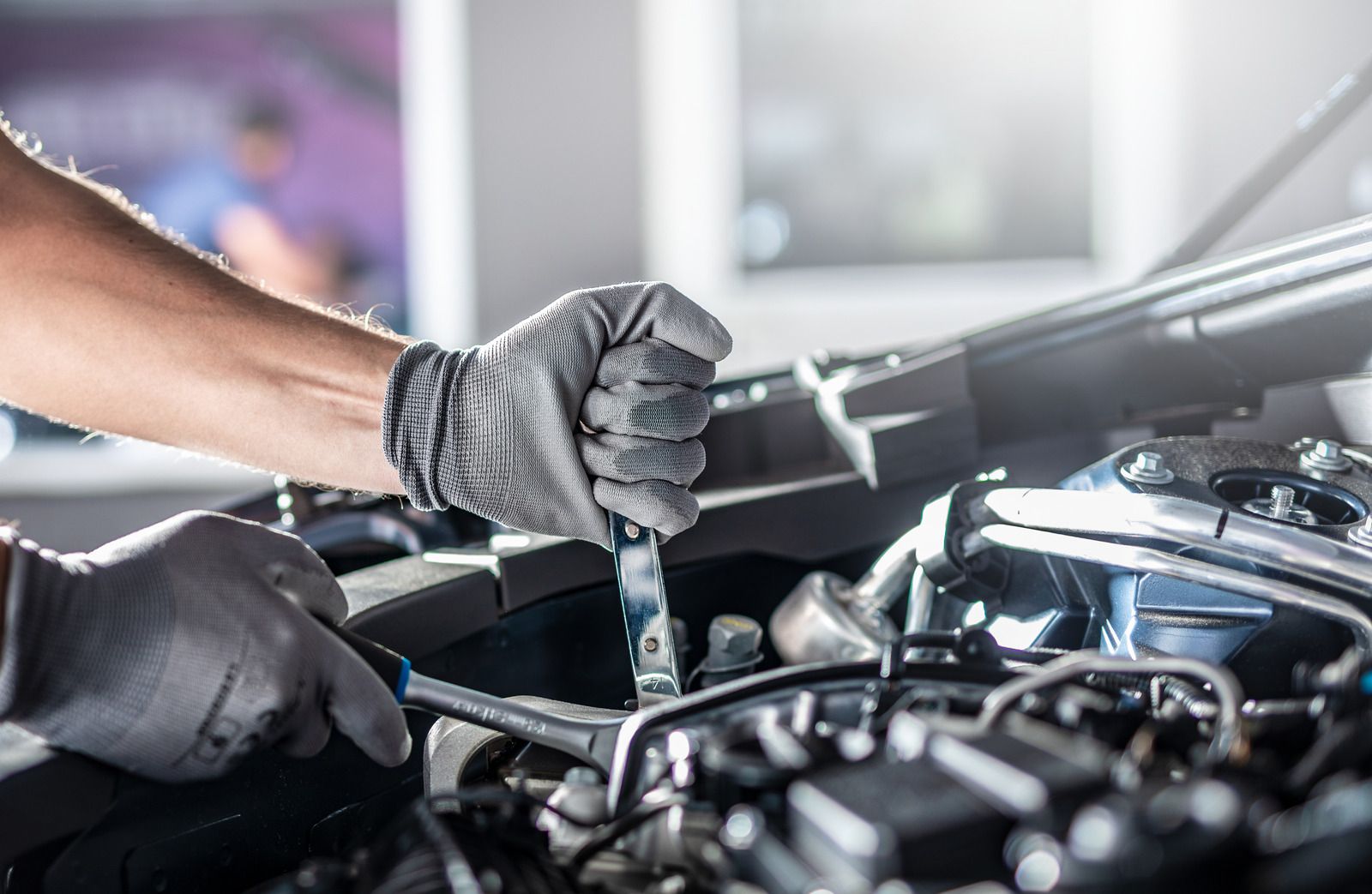
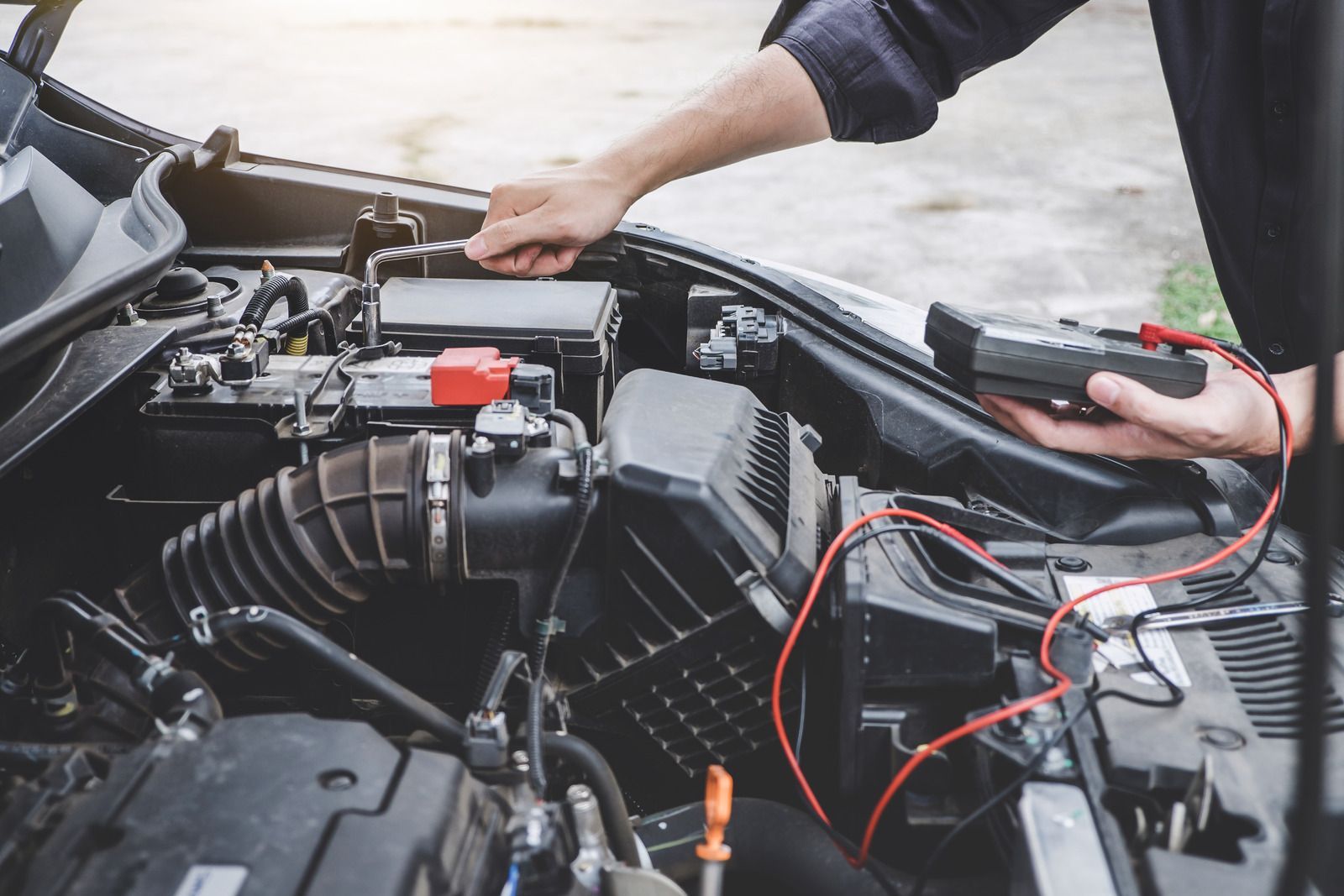
Nearly every electrical fault starts small. A ground strap loosens, a connector corrodes, insulation chafes against a bracket, and the vehicle keeps running until the day it does not. Voltage drop testing, load testing, and a draw measurement turn those invisible faults into numbers we can point at, which is how a charging fault gets separated from a wiring fault.
Nothing gets replaced on a hunch here. Circuits get measured under load, grounds get checked for resistance, and the repair follows whatever the meter proves rather than whatever part is easiest to reach.
- Alternator and charging system testing
- Parasitic draw measured in milliamps
- Grounds and connectors checked under load
- Written estimate before any repair
AUTO ELECTRICAL REPAIR
INTERMITTENT IS THE HARDEST WORD IN THIS TRADE.
Faults that come and go are the ones drivers get told cannot be reproduced. Our technicians chase them with voltage drop tests across every ground and connection, wiggle testing on suspect harness sections, and a scan tool watching for communication dropouts while the engine runs. Heat, vibration, and moisture each change how a marginal circuit behaves, so testing recreates the condition you described instead of checking the vehicle cold on a quiet lift.
COMMUTE MILES ARE HARD ON CHARGING SYSTEMS.
Four freeways converge around Pomona, the 10, the 57, the 71 and the 210, so local vehicles spend long stretches idling with headlights, blowers, wipers, and phone chargers all drawing current at the moment an alternator spins slowest. Add underhood heat across the hot stretch, when August highs average near 92 degrees, and diodes, brushes, and connectors age faster here than the odometer suggests.
WIRING DOES NOT LIE, IT JUST HIDES.
Electrical complaints repeat themselves. In 35 years we have seen the same ones arrive in different vehicles: a car that starts every morning except Monday, a dash light that flickers only over railroad tracks, a radio that cuts out at full steering lock. Those patterns tell us which circuit to open first. Modern diagnostic equipment supplies the readings, and long exposure to the same failures tells us where a reading is worth taking.
WHY CHOOSE US FOR AUTO ELECTRICAL REPAIR.
A DIAGNOSIS YOU CAN SEE
Meter readings, draw measurements, and voltage drop numbers get shown to you alongside the factory specification. You leave knowing which circuit failed and by how much, not just which part got billed.
ONE FAULT, NOT A PARTS LIST
Batteries, alternators, and starters get blamed for each other constantly. Testing all three separately means you replace only the component that actually failed, which keeps an electrical repair from doubling.
INTERMITTENT FAULTS TAKEN SERIOUSLY
Being told a problem cannot be reproduced helps nobody. Conditions you describe get recreated here, including heat, vibration, and load, so a fault that only appears sometimes still gets caught.
WRITTEN ESTIMATE BEFORE ANY WORK
California requires a written estimate and your authorization before a repair begins, and that limit is never exceeded without your consent. Approve the number first, then decide what happens and when.
COVERAGE THAT TRAVELS WITH YOU
Most products installed here carry a nationwide warranty of 2 years or 24,000 miles, so an alternator or starter replaced today still protects you several states away from home.
EVERY MAKE, DOMESTIC AND IMPORT
Wiring architecture differs sharply between manufacturers, and we work on all makes and models, domestic and import. Diagrams and specifications are matched to your vehicle rather than a generic pattern.
WHAT WE REPAIR
OUR AUTO ELECTRICAL WORK.
Repairs here run from the charging system down to the smallest ground strap. Every item below begins with measurement rather than replacement, and each fix follows the reading a meter produced on your own vehicle.
ALTERNATOR TESTING
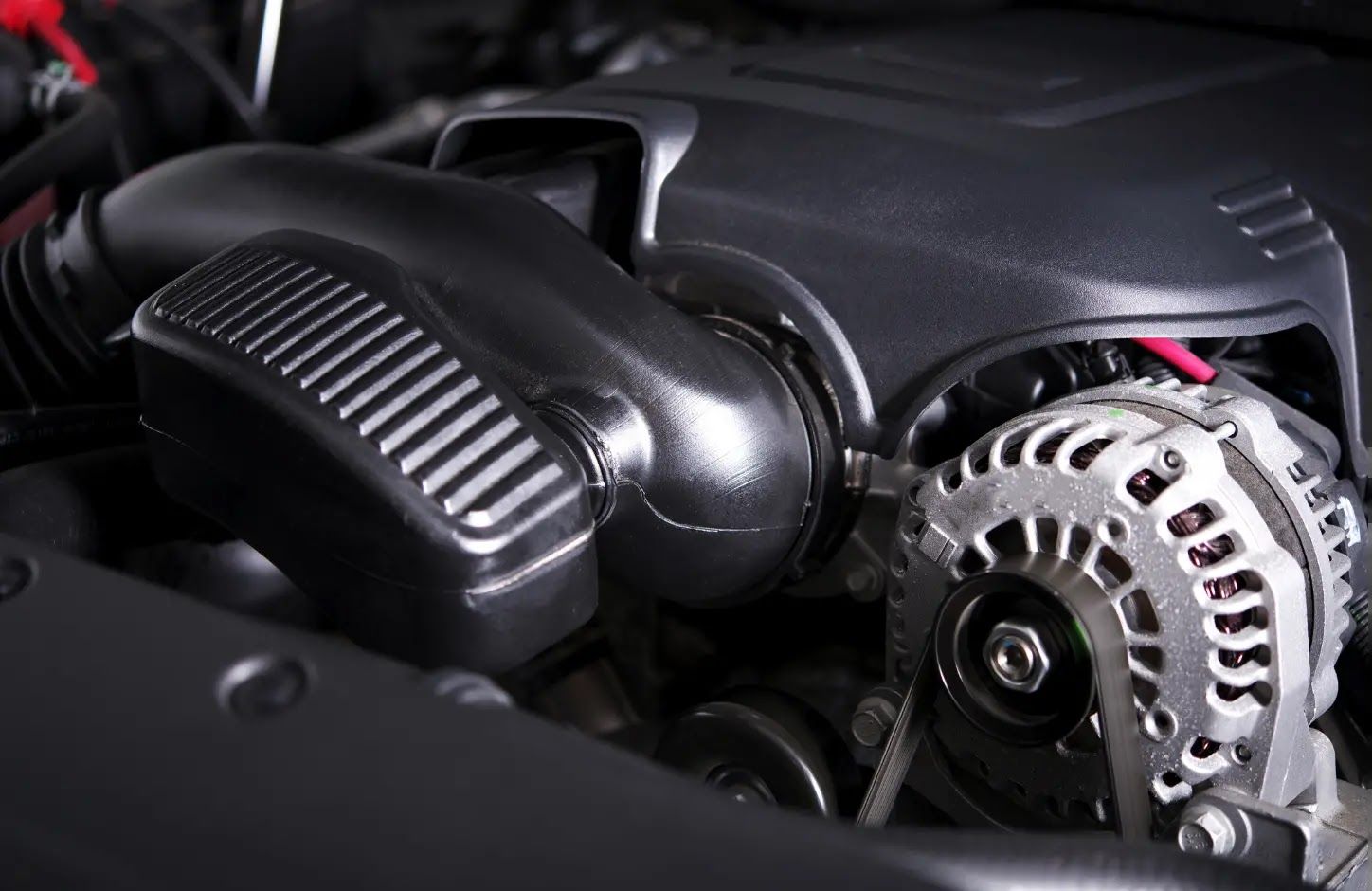
Alternator Diagnosis And Replacement
Output gets measured at idle and under full accessory load, ripple is checked for failed diodes, and belt tension and pulley condition get inspected. Replacement happens only after the charging fault is confirmed.
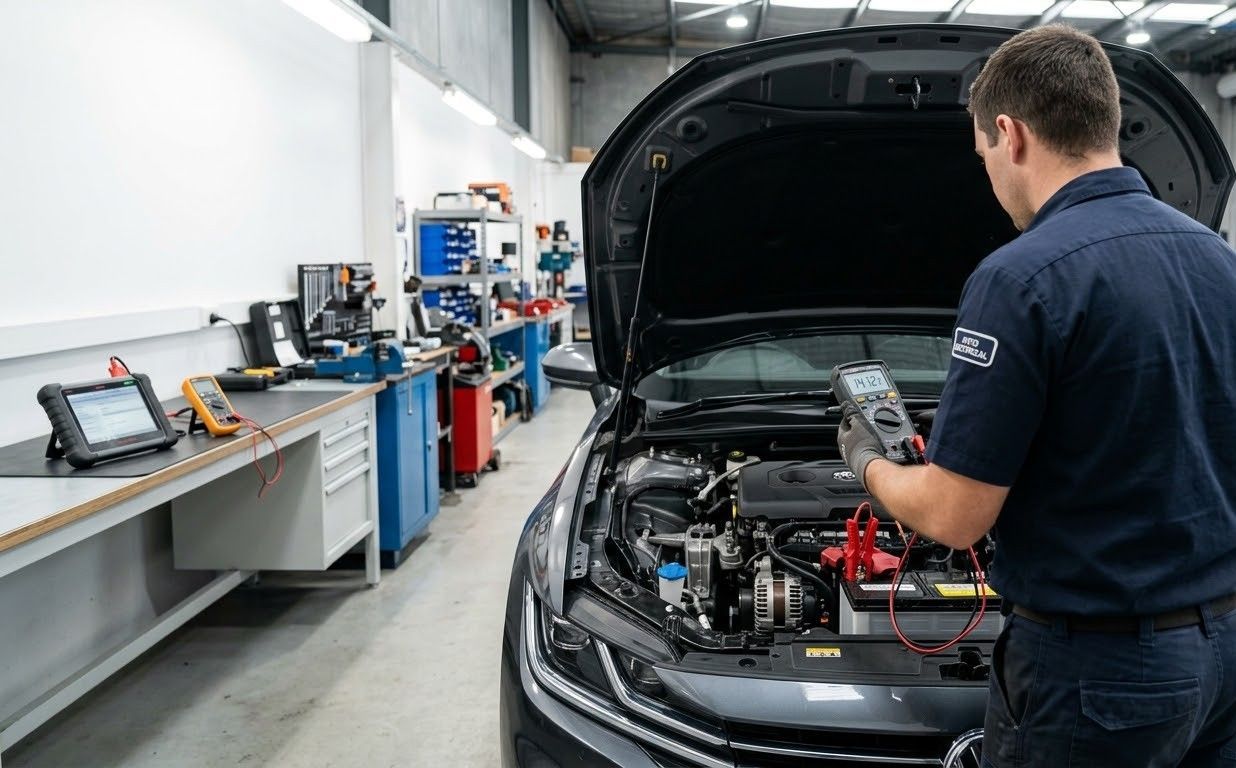
CHARGING SYSTEM
Charging System Diagnostics
Voltage gets recorded with the engine off, at start, at idle, and at speed, then compared against the range your manufacturer specifies. Cables, grounds, and the regulator circuit are all included in that sequence.
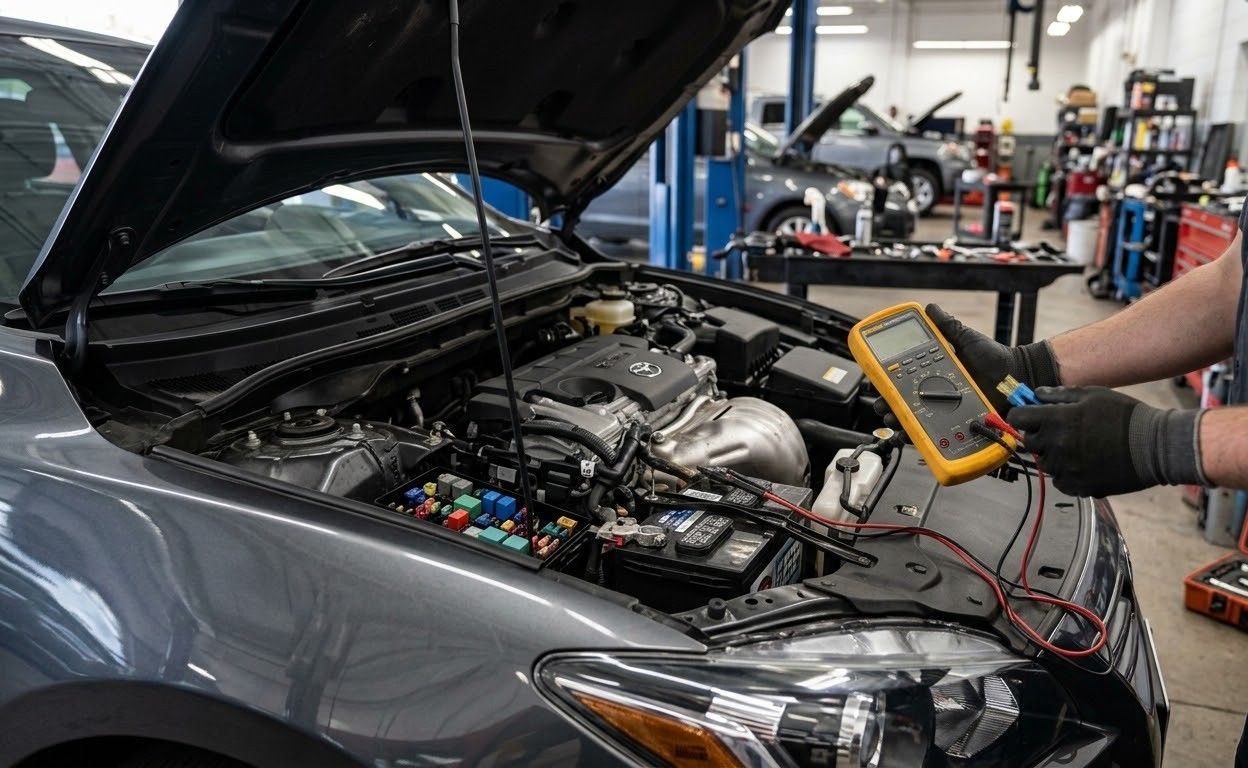
DRAW TESTING
Parasitic Draw Testing
After the vehicle goes to sleep, current leaving the battery gets measured in milliamps. Anything above the 20 to 50 milliamp range points at a module, switch or circuit that never shuts off.
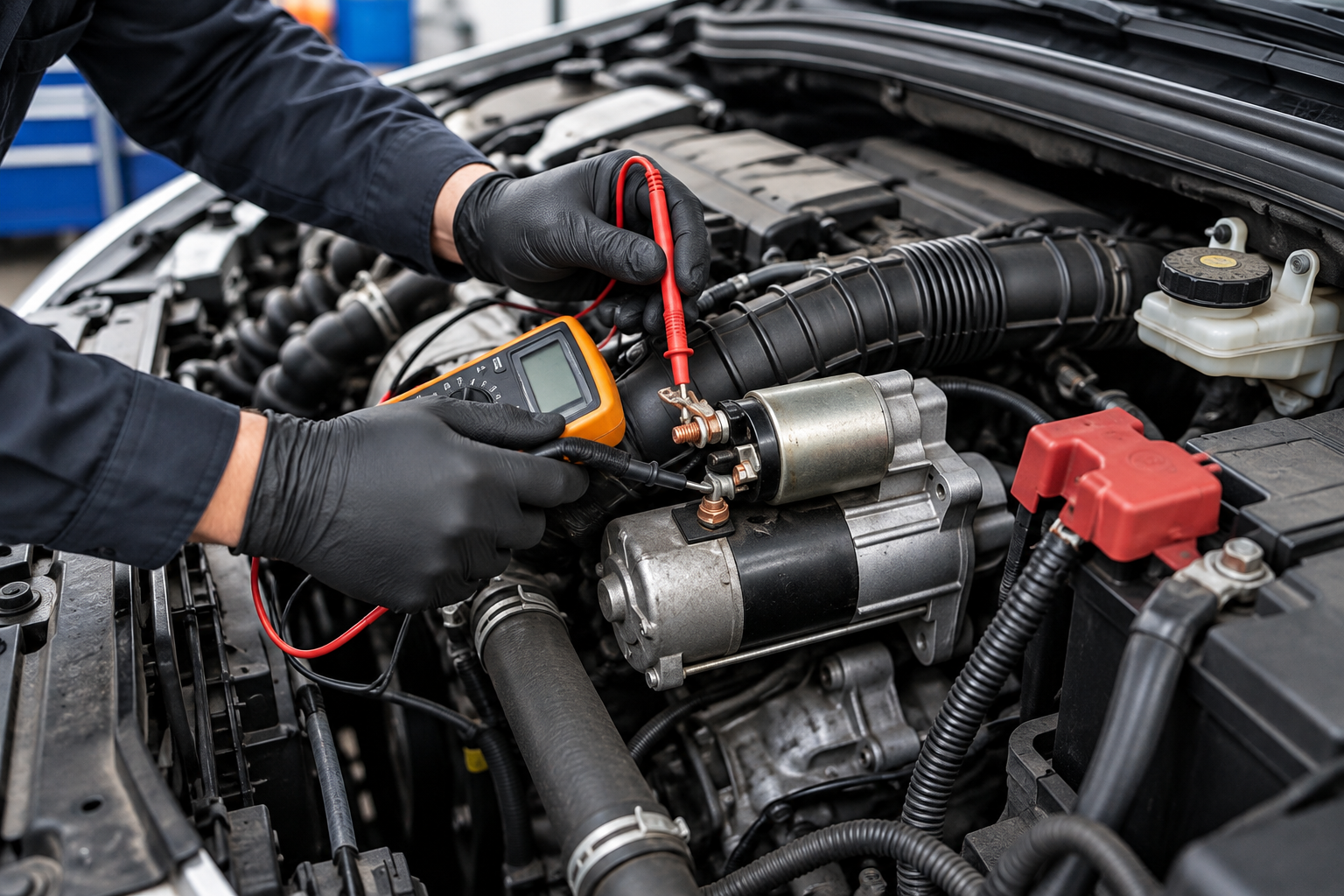
STARTING CIRCUIT
Starter And Starting Circuit Repair
Silence at the key, a single click, and a slow lazy crank each point somewhere different. Starter draw, solenoid function, ignition switch signal, and the heavy cable path all get tested before anything is replaced.
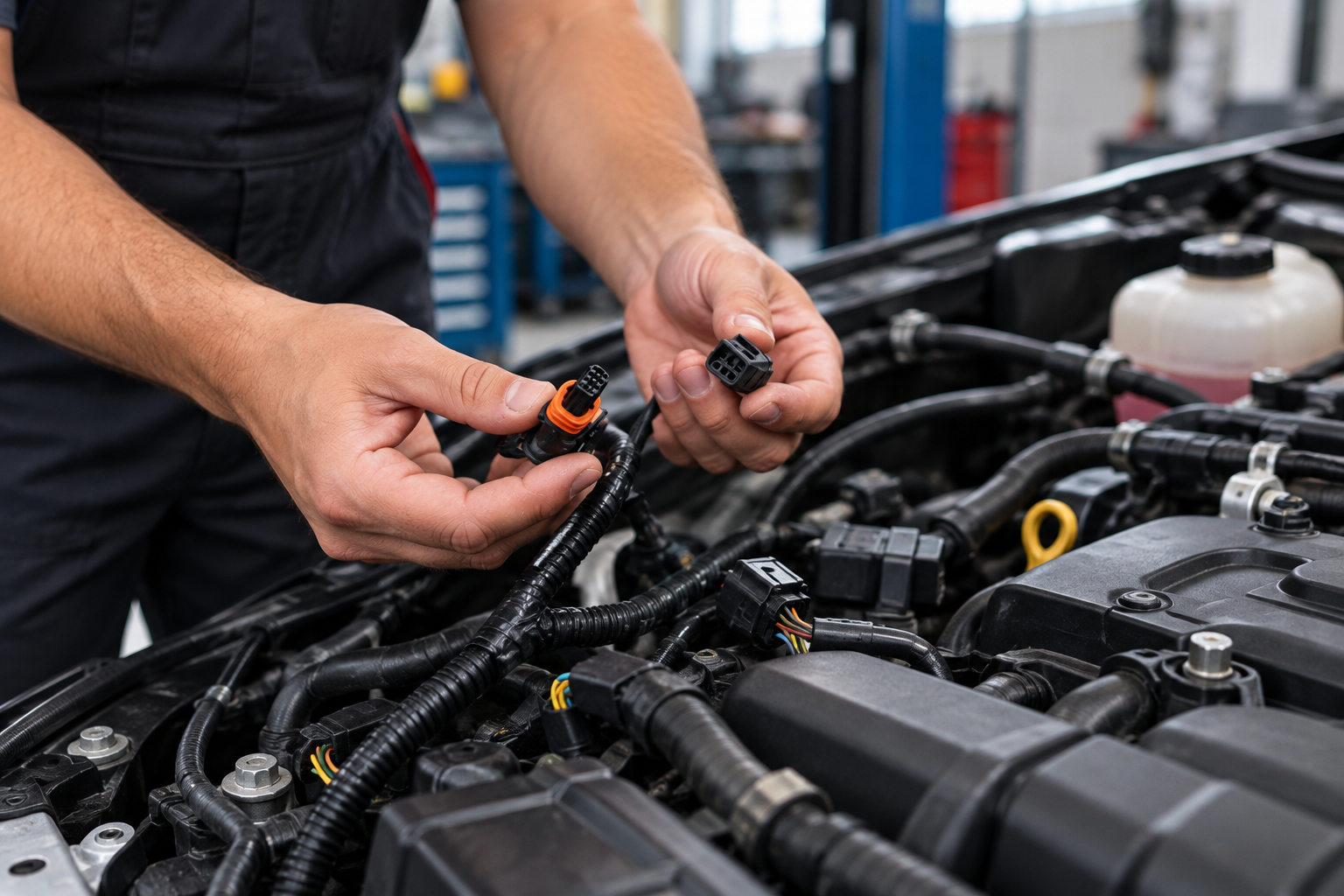
HARNESS REPAIR
Wiring, Ground And Connector Repair
Chafed insulation, green corrosion inside a plug and a loose ground strap cause faults that look electronic and are not. Damaged sections get repaired properly, then the circuit is retested under actual load.
FUSE WORK
Fuse, Relay And Power Accessory Repair
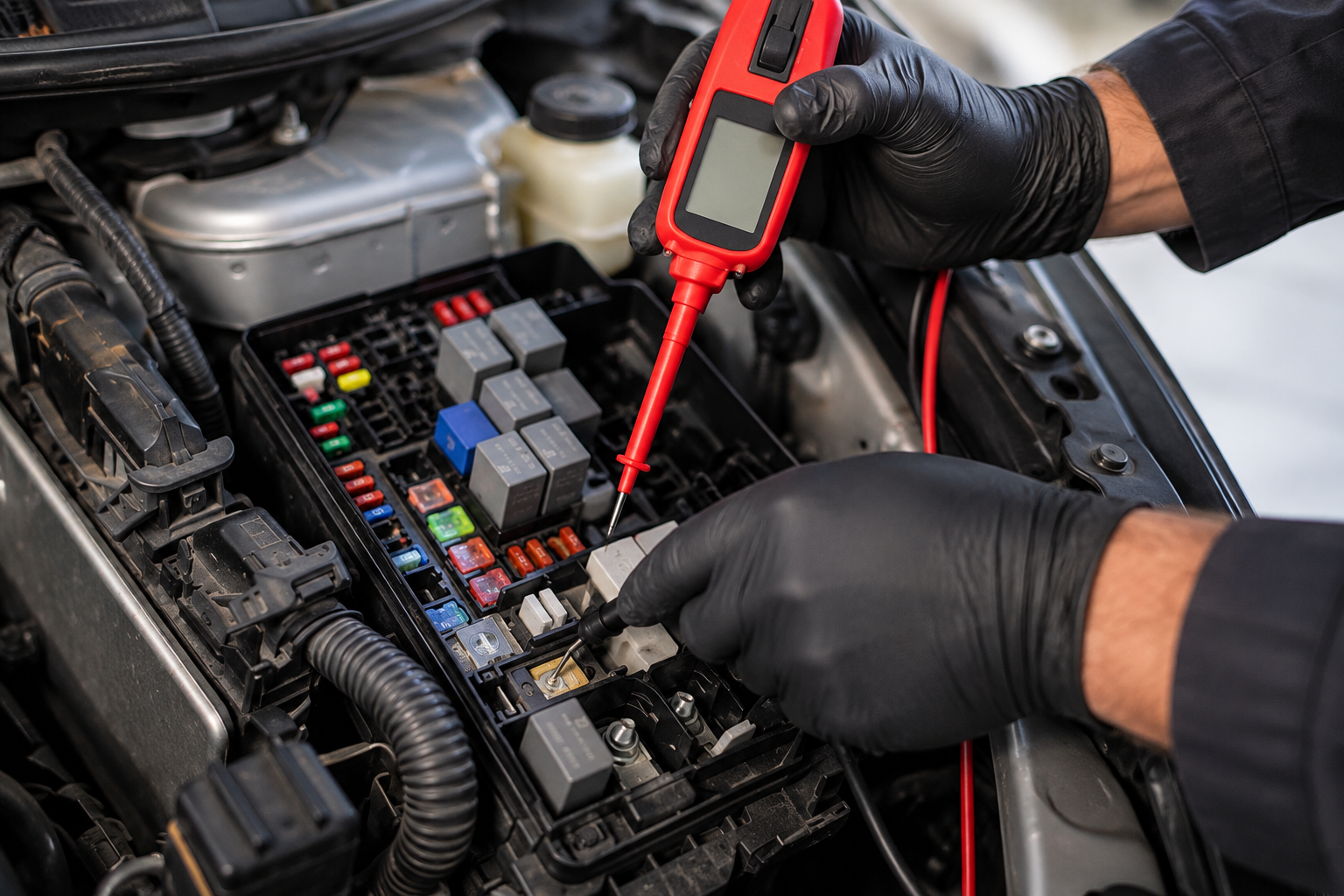
Windows, locks, mirrors, wipers, lighting, and interior power outlets all fail through fuses, relays, switches or the wiring between them. Testing follows the circuit from the fuse panel to the device itself, in that order.
THE WORD ON OUR WORK
WHAT OUR CLIENTS SAY.
Local drivers keep mentioning the same things in reviews: a part ordered in the morning went on the same day, a repair finished ahead of the estimated date, and honest news that work a customer expected to pay for was not needed yet.
Common Questions
frequently asked
questions.
Questions about electrical faults usually arrive after something odd happened once and then stopped. These answers cover charging faults, draw problems, starting trouble, and the accessories that quit without any obvious reason.
What are the signs of a failing alternator?
Dimming headlights, a battery warning light, a whine that rises with engine speed, slow power windows, and repeated dead batteries are the common signs. Output and ripple testing confirm whether the alternator is charging within the range your manufacturer specifies.
What does a charging system test actually check?
Battery state of charge, alternator output at idle and under load, ripple from failed diodes, cable resistance, and ground quality all get measured. M & A Auto Care performs charging system diagnostics in Pomona, CA before recommending any part.
Why are my headlights dim or flickering?
Low charging output is the first suspect, followed by a corroded ground, a loose battery cable, a failing headlight switch or a worn connector at the bulb. Voltage drop testing across each connection finds the resistance causing it.
Why does the same fuse keep blowing?
Fuses protect a circuit, so one that blows repeatedly is reporting a short to ground, a pinched wire or a component drawing more current than the circuit was designed to carry. Replacing it alone never fixes the underlying fault.
What is a parasitic draw and how is it found?
Parasitic draw is current a sleeping vehicle keeps using. Once modules power down, anything beyond roughly 20 to 50 milliamps is excessive, and pulling fuses one at a time while watching the meter isolates the circuit responsible for it.
Is a no-start the starter, the battery or the alternator?
Testing separates them in minutes. A battery is judged on load and cold cranking amps, a starter on current draw and solenoid action, and an alternator on charging output. M & A Auto Care tests all three in Pomona, CA.
Why did my power windows and radio stop working?
Shared power feeds are the usual answer. Several accessories running through one fuse, relay or ground point will quit together when that single connection fails, which is why testing starts at the common point rather than each device.
What does the battery warning light on my dash mean?
That light monitors the charging system, not the battery itself. It usually means output has fallen outside the expected range, so a belt, alternator, regulator or cable is suspect. Driving on it risks a stall once reserve capacity runs out.
HOW WE WORK
HOW WE TRACE AN ELECTRICAL FAULT.
STEP 01
Capture The Exact Conditions
You tell us when it happens: cold mornings, after a car wash, only with the A/C on, only after the vehicle sits overnight. Those details decide which test comes first and save you money on diagnostic time.
STEP 02
Scan For Stored Codes
Body, chassis, and network codes get pulled alongside engine codes, because an electrical complaint often leaves a record in a module nobody thought to check. Freeze frame data and network status get saved before anything is cleared from memory.
STEP 03
Measure The Charging System
Readings at rest, during cranking, at idle, and under full accessory load get recorded and compared against factory values. Ripple, belt condition, and cable resistance are checked in the same pass, because each one affects the others.
STEP 04
Isolate The Circuit
With the charging system cleared or condemned, testing moves to the specific circuit: voltage drop across grounds and connections, continuity through suspect harness runs, and a draw test if the battery keeps going flat overnight in your driveway.
STEP 05
Write The Free Estimate
Test results, meter readings, and a free written estimate reach you before any repair begins, which is what California requires and how we prefer to work. Urgent items get separated from what can safely wait until your next visit.
STEP 06
Repair And Retest Under Load
Approved repairs go in with correct terminals, torque, and protection, then the circuit is retested under the same load that first exposed the fault. Nothing goes back to you on a cleared code and a hopeful guess.