
Oil Changes
OIL CHANGES IN Pomona, CA
Oil that runs 3,000 to 5,000 miles in stop-and-go traffic does not look like oil that ran the same distance on open highway. M & A Auto Care handles oil changes in Pomona, CA as a measured service: old oil drained warm, a new filter fitted, fresh oil of the correct grade poured to spec, and fluid levels checked before the hood closes. Every drain plug gets a fresh gasket where the design calls for it, and torque goes to spec.
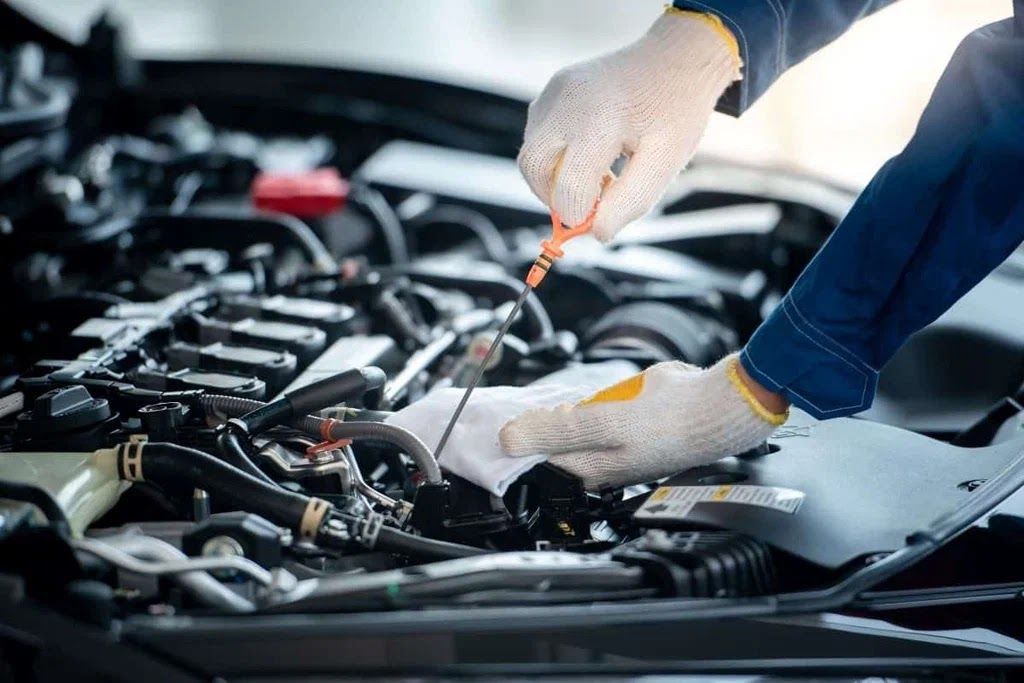

OLD OIL STOPS PROTECTING BEFORE IT LOOKS BAD.
Motor oil does not simply get dirty. Its additive package depletes, its viscosity drifts, and the film that keeps metal off metal gets thinner every heat cycle. By the time the dipstick reads black and thin, bearing surfaces and camshaft lobes have already been running on less protection than the engine was ever designed to have.
Draining warm oil pulls more of the suspended debris out with it. That is why we run the engine up to temperature first instead of pulling the plug on a cold sump.
- Old oil drained at temperature
- New filter fitted every service
- Grade matched to your engine
- Fill level verified before release
OIL CHANGES
THE DRAIN PLUG IS WHERE HONESTY STARTS.
Each oil change here follows the same order. We bring the engine to operating temperature, drain the old oil completely, remove and replace the filter rather than reuse it, seat a fresh gasket at the plug, then refill with the viscosity your manufacturer specifies. Levels get checked with the vehicle settled, not on a lift, and the sticker records the mileage and the date so your next service is easy to time.
COMMUTER MILES ARE HARD MILES ON OIL.
Short hops between the 10 and the 57 never let oil reach full temperature long enough to boil off moisture and fuel dilution. Add an August daily high near 92 degrees and oil thins exactly when load is highest. Some newer models genuinely stretch to 7,500 miles or more, but local commuting rarely earns that number. We check the schedule for your engine rather than assume.
POMONA ENGINES LEAVE EVIDENCE IN THE PAN.
Used oil tells stories. Oil that comes out gritty, milky, or thin as water points at something the sticker interval never mentions, and we say so before refilling. Our technicians are ASE-experienced, which means we have seen enough sumps to know when an oil change is the whole answer and when it is covering for a leak, a cooling problem or a worn engine. Over 35 years that judgment has saved plenty of unnecessary parts.
WHY CHOOSE US FOR OIL CHANGES.
THE RIGHT GRADE GOES IN YOUR ENGINE
Grade is not a preference. We look up what your manufacturer specifies, confirm whether the engine calls for synthetic, and fill with that, so oil pressure behaves the way it should.
A NEW FILTER EVERY SINGLE TIME
Filters are never reused or wiped out here. A fresh element and a properly seated seal go on with every drain and refill, because a bypassing filter makes clean oil pointless.
YOU LEAVE KNOWING YOUR NEXT INTERVAL
Before you drive off, the next service is written down and matched to how the vehicle is actually used, so the interval reflects your commute instead of a generic wall chart.
NO UPSELL ATTACHED TO A DRAIN AND FILL
Anything we notice on the lift gets reported, not sold. If the only thing your vehicle needs today is oil and a filter, that is the entire ticket you pay.
IN AND OUT WITHOUT LOSING YOUR DAY
Routine drain and fill work is booked as its own appointment, so your vehicle is not sitting in line behind larger jobs. Most drivers are back on the road the same morning.
FREE ESTIMATES AND A CASH DISCOUNT
Pricing is on paper before work starts, cash payment earns a 4% discount, and financing options exist for the larger repairs an oil change sometimes uncovers. Free estimates apply either way.
WHAT WE REPLACE
OUR OIL CHANGE WORK.
An oil service is a short list done correctly, not a long list done fast. Here is exactly what happens between the moment your vehicle goes up and the moment it comes back down.
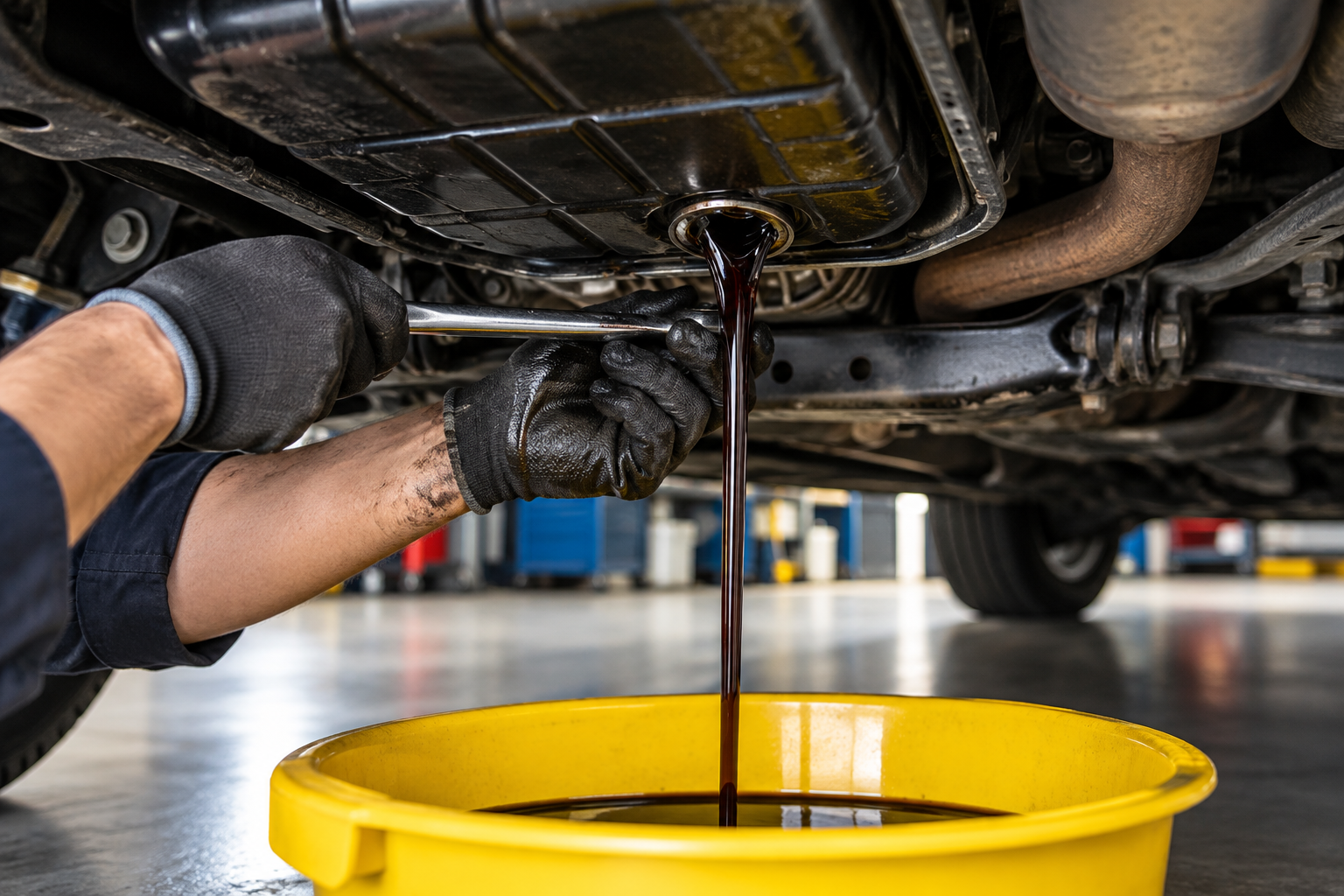
FULL DRAIN
Old Oil Drain
Warm oil carries suspended particles out with it, so the engine is brought up to temperature before the plug comes loose. The sump gets time to empty fully rather than a quick partial drain.
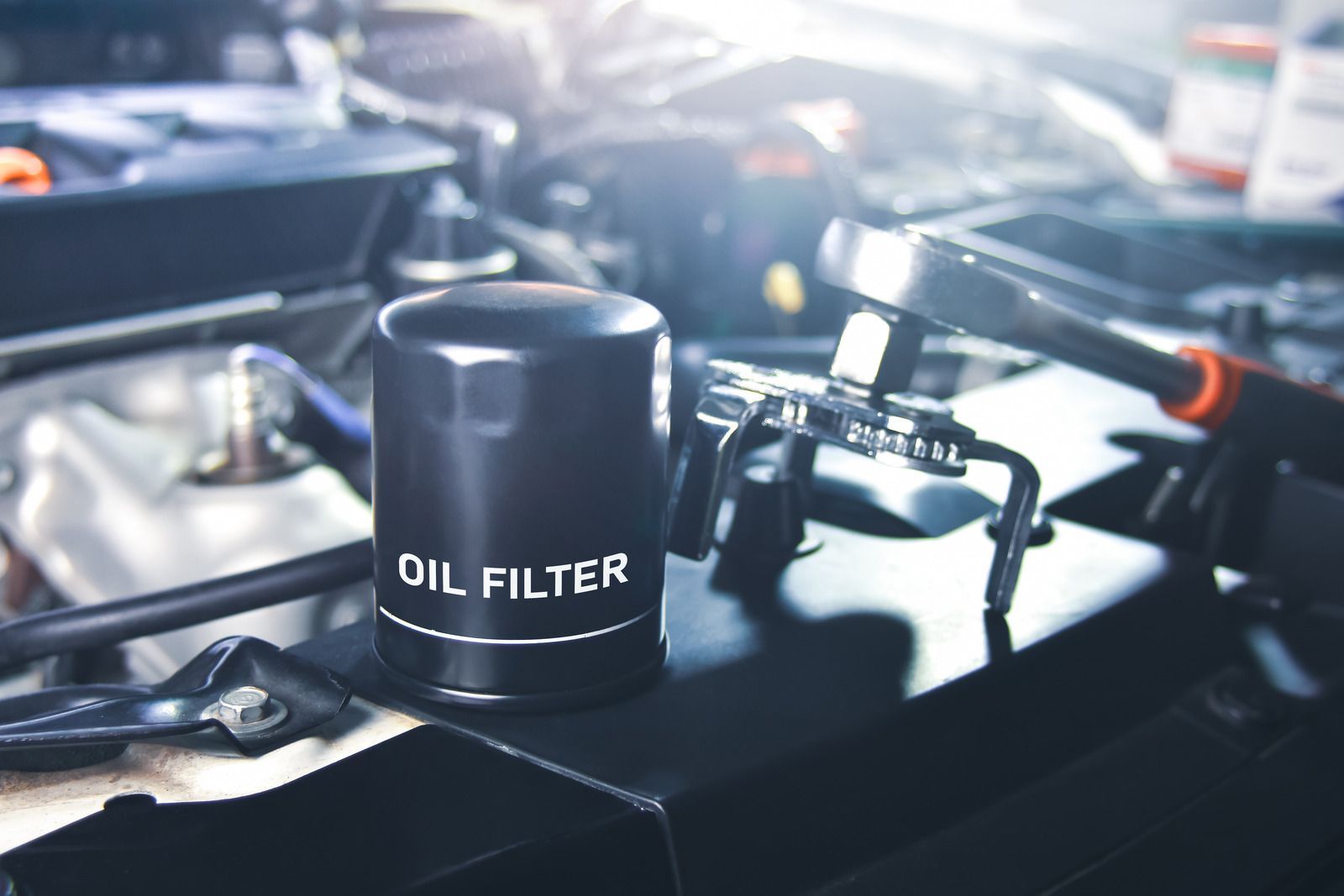
FILTER REPLACEMENT
Oil Filter Replacement
A new filter goes on with every service. The old element comes off, the mating surface gets cleaned, the fresh gasket gets a light film of oil, and the housing is torqued to specification.
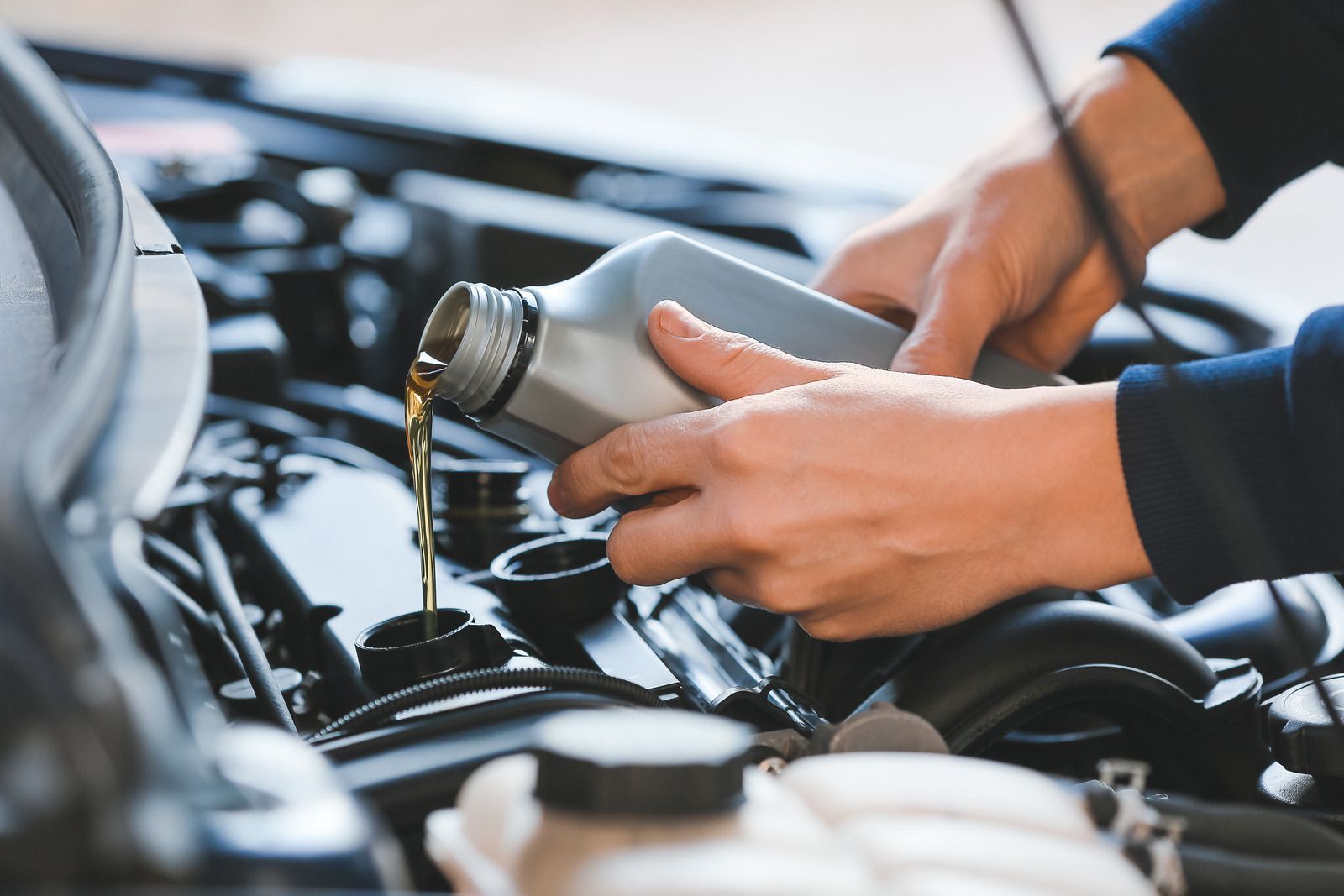
CORRECT GRADE
Fresh Oil Refill
Refill volume and viscosity both come from your manufacturer specification, not from a house default. Conventional or synthetic is decided by what the engine was built to run, then filled and rechecked cold.
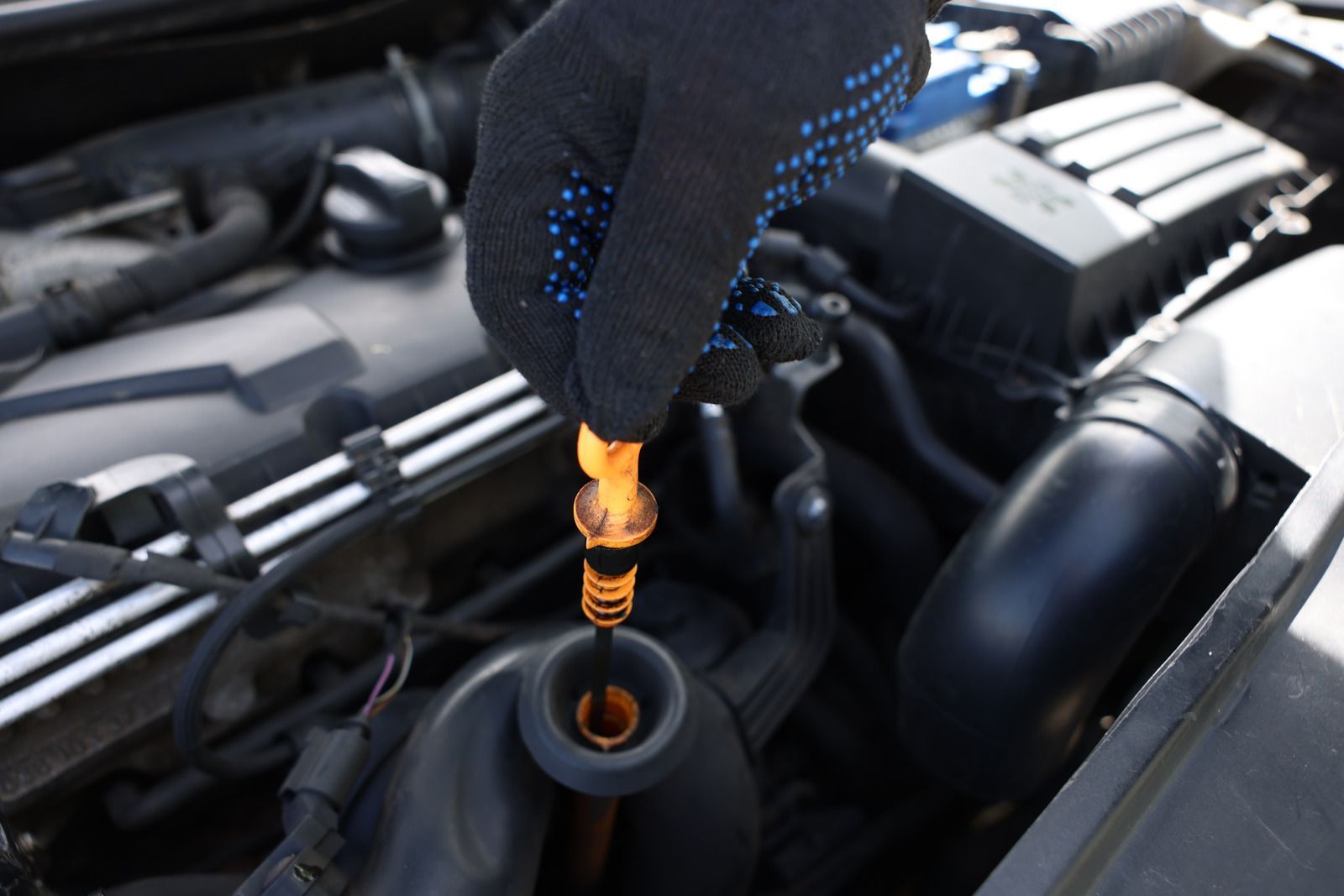
LEVEL CHECK
Fluid Level Verification
Once the new oil settles, the dipstick gets read on level ground and corrected if needed. Other reservoirs get a quick look at the same time so nothing obvious leaves the bay unnoticed.

INTERVAL SETTING
Oil Change Interval Setting
Your next service gets set on mileage and driving pattern, generally 3,000 to 5,000 miles, with 7,500 or more reserved for engines whose manufacturers actually publish that figure. The sticker records both numbers.
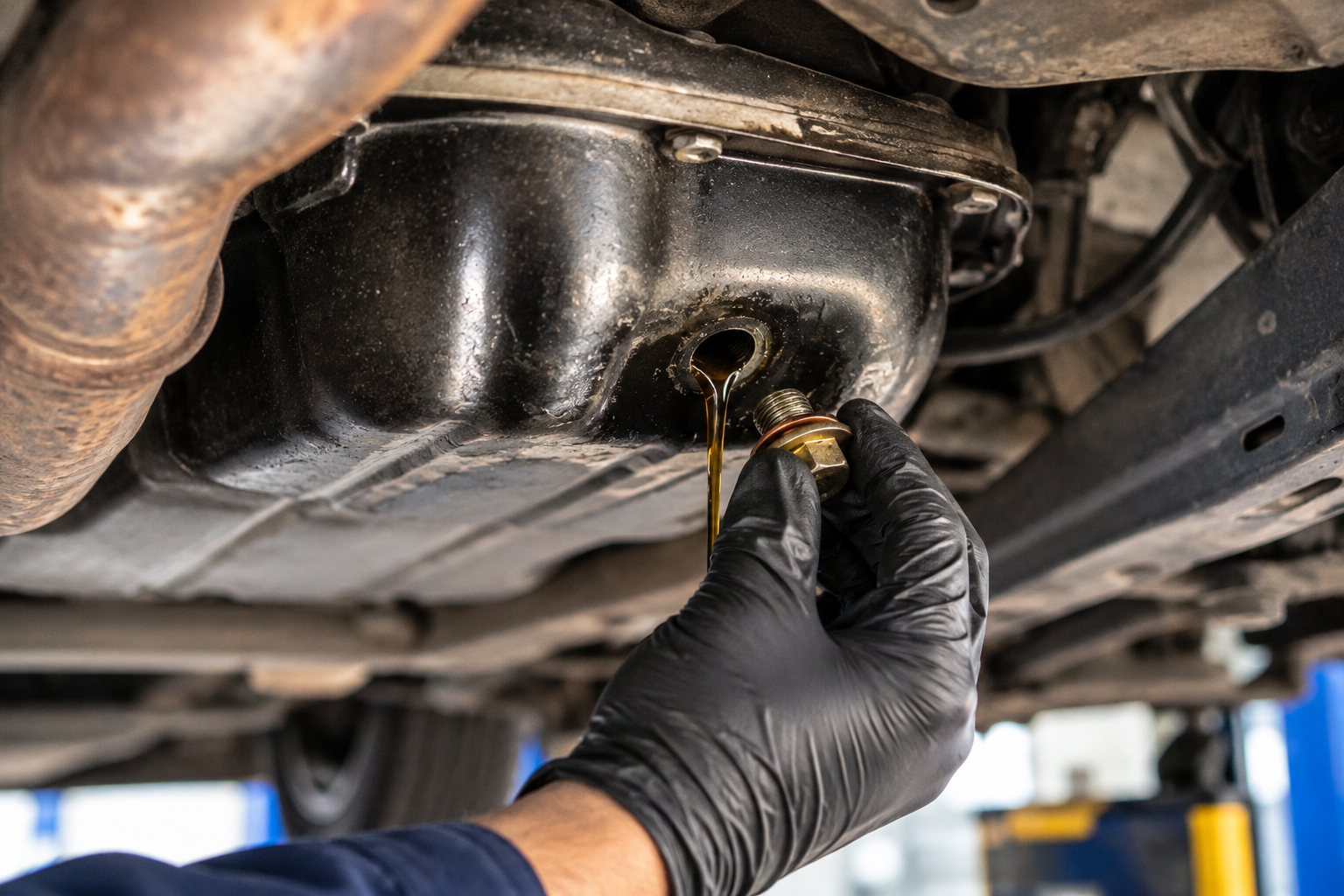
LEAK LOOK
Drain Plug And Seal Check
Threads, gaskets, and the filter housing get checked for weeping before the vehicle comes down. A plug that will not hold torque or a seal that seeps gets flagged instead of sent out to drip.
THE WORD ON OUR WORK
WHAT OUR CLIENTS SAY.
Drivers mention the same details back to us: a part ordered in the morning going on the same day, a job finishing before the date written on the estimate, and being told a component still had life left instead of being billed for it.
Common Questions
frequently asked
questions.
Below are the oil questions drivers ask most at the counter. Each answer sticks to what we can verify on your vehicle rather than what a quick-lube sign says.
How often should I change my oil?
Every 3,000 to 5,000 miles suits most engines running local traffic, and some newer models are rated for 7,500 or more. We set yours from the manufacturer figure and how the vehicle is driven, not from a fixed number on a poster.
Do I need synthetic oil or is conventional fine?
Whatever your manufacturer specifies is the answer. Many modern engines with turbochargers or tight tolerances require synthetic and will suffer on conventional, while plenty of older designs run perfectly well on a quality conventional grade. We look yours up rather than guess.
What does 5W-30 actually mean?
Viscosity grade. The first number describes flow when cold, the W stands for winter, and the second describes thickness at operating temperature. Using a grade your engine was not designed for changes oil pressure and wear rates measurably.
Does my oil filter need changing every time?
Yes. A filter holds only so much before its bypass valve opens and unfiltered oil circulates. Reusing one puts old debris back into fresh oil, so a new element goes on with every drain and refill, without exception.
Can I trust the oil life monitor on my dashboard?
Treat it as an estimate, not a measurement. Most systems calculate from engine hours, temperature, and load rather than testing the oil itself, so severe stop-and-go duty can leave the percentage optimistic by a wide margin. We read the dipstick as well.
My oil looks black. Does that mean it is bad?
Dark oil is normal, since detergents are doing the job of holding soot in suspension. Grit, a milky tint or a burnt smell matter far more, and M & A Auto Care in Pomona, CA checks for all three.
What happens if I keep driving on low oil?
Pressure drops first, then the film between moving parts thins, and bearings, camshafts, and turbochargers start wearing at a rate you cannot see. Chronic low level usually points at a leak or consumption that deserves its own diagnosis.
What happens if I skip an oil change?
Sludge forms as depleted oil oxidizes, passages narrow, and the engine runs hotter with less protection than it was built for. Bringing the vehicle to M & A Auto Care in Pomona, CA sooner is far cheaper than the repair that follows.
HOW WE WORK
WHAT AN OIL SERVICE LOOKS LIKE HERE.
STEP 01
Confirm The Specification
Year, make, model, and engine come first, because oil capacity, and viscosity change between trims. We pull the manufacturer figure rather than guessing from a chart on the wall, and confirm it with you before anything starts.
STEP 02
Warm The Engine
Cold oil clings to the sump and carries less debris out with it. A short run brings temperature up so the drain is complete, which matters more on a high-mileage engine than most drivers would ever expect.
STEP 03
Drain And Replace The Filter
The plug comes out, the sump empties fully, and a fresh gasket goes on before it is torqued back. The old filter comes off, the mating face gets wiped clean, and a new element goes on.
STEP 04
Refill To Specification
Fresh oil goes in by measured volume, not by eye. We fill to the manufacturer capacity, run the engine to circulate it through the new filter, then shut down, and let everything settle back into the sump.
STEP 05
Verify The Level
With the vehicle down and level, the dipstick gets read and corrected if it sits low. Under the hood, we look for weeping at the plug and the filter before anything is signed off and the keys come back.
STEP 06
Set The Next Interval
Date and mileage go on the sticker, and we tell you what the schedule looks like for your engine. Old oil and the used filter go out through proper recycling rather than into a storm drain.