
Brake Repair
BRAKE REPAIR IN Pomona, CA
Brake pads commonly last 25,000 to 70,000 miles and rotors 30,000 to 70,000, though stop-and-go commuting shortens both. M & A Auto Care handles brake repair in Pomona, CA for domestic and import vehicles: pad and rotor replacement, caliper service, hydraulic line repair, brake fluid condition checks, and a road test on every job. We measure rotor thickness against specification, show you the wear we found, and explain the repair before you approve anything. That last step is never skipped.
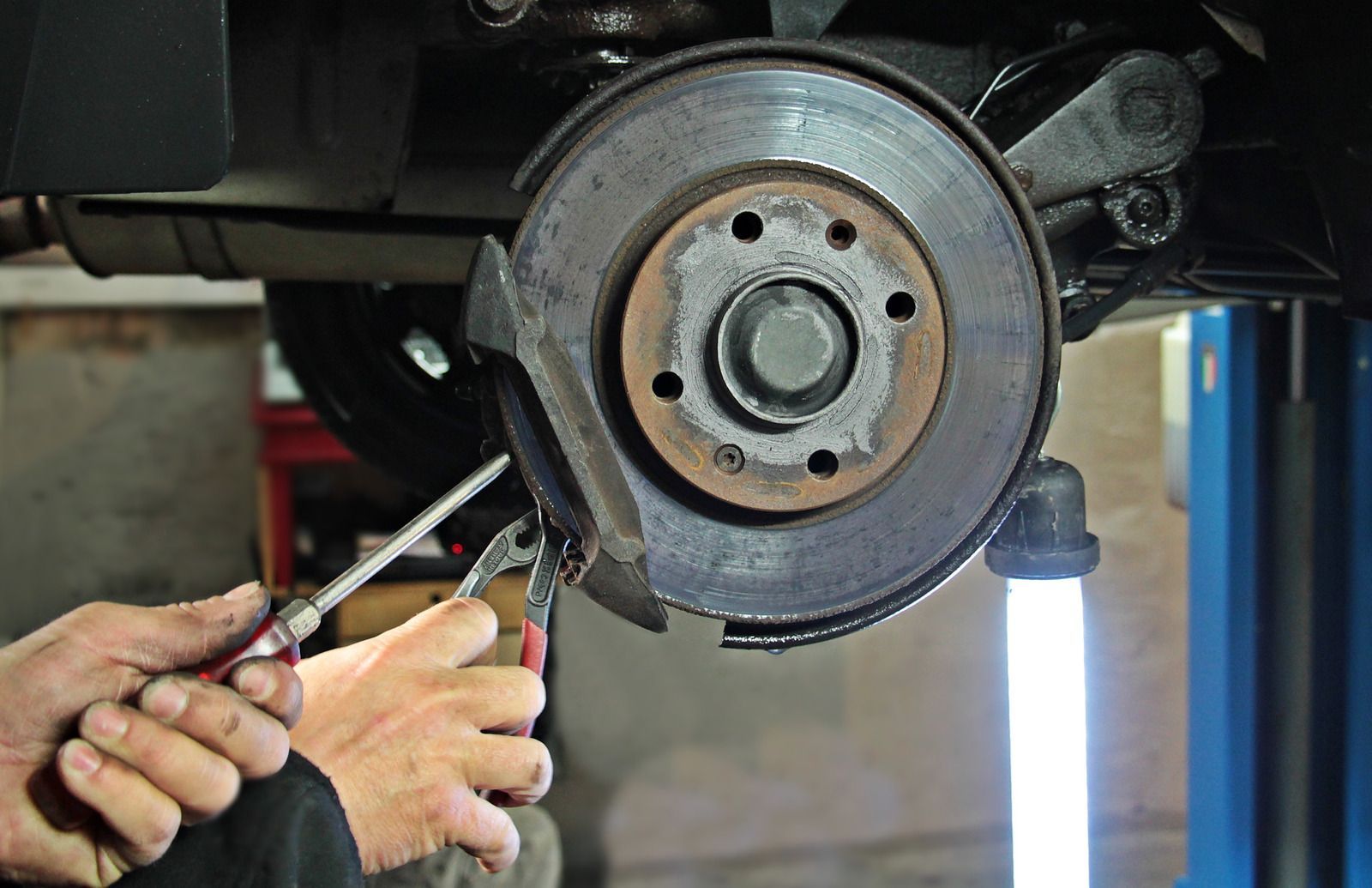
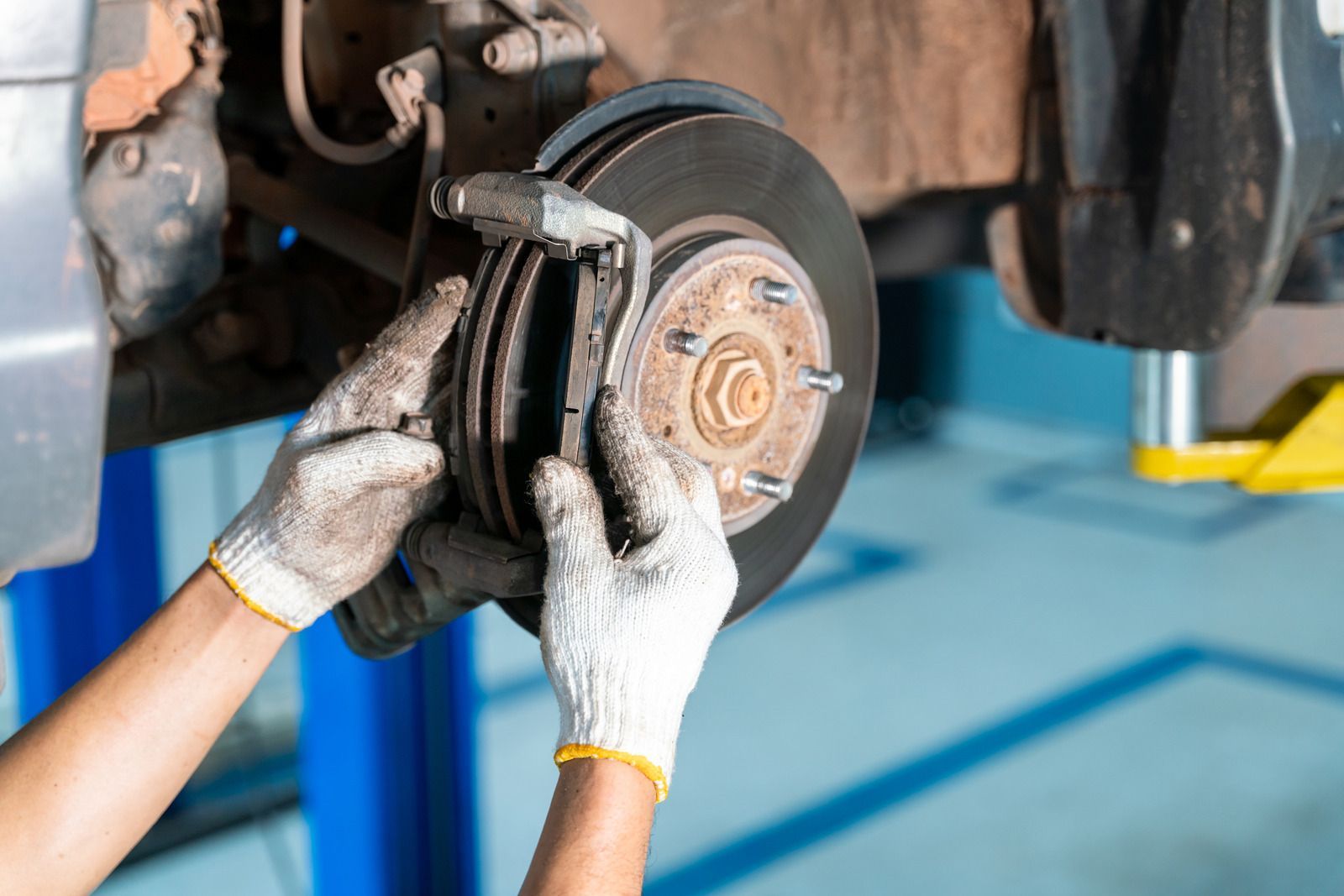
WORN BRAKES ANNOUNCE THEMSELVES BEFORE THEY FAIL.
Failing brakes give warning long before a pedal goes to the floor. A squeal at low speed, a grinding note when you slow for a light, a pedal that sinks a little under steady pressure, or a stopping distance that has stretched by a car length. Each of those points at a different part of the system, and each gets checked separately.
Pads, rotors, calipers, and hydraulic lines wear at different rates. We inspect all four before quoting, because replacing pads on a rotor that is already below minimum thickness buys you very little.
- Rotor thickness measured, not guessed
- Road test after every brake job
- Free estimates before any work
- Repairs explained before you approve
BRAKE REPAIR
STOPPING POWER IS NOT SOMETHING TO RATION.
Braking turns motion into heat, and every part of the system has to survive that. Pads press against rotors, calipers force them there, hydraulic lines carry the pressure from your foot, and brake fluid does the carrying. Let any one of those degrade and the rest work harder. Our brake repair covers all of it, from a single seized caliper slide to a full pad and rotor replacement on all four corners.
POMONA COMMUTES EAT BRAKES FASTER THAN HIGHWAY MILES.
Pomona, CA sits where the 10, the 57, the 71 and the 210 meet, so a large share of local miles are stop-and-go commuting miles. Every merge and every backup is another heat cycle through the pads and rotors. Drivers here often reach pad replacement well before the 70,000-mile end of the normal range, and a set that looked fine at the last oil change can be marginal by the next.
WE HAVE TOLD PLENTY OF DRIVERS THEY DO NOT NEED BRAKES.
That happens more often than you would think. Somebody comes in certain the pads are gone, we pull the wheels, measure, and the pads still have life left. Saying so costs us a sale and keeps a customer, which is how 35 years of brake work in this valley tends to go. The measurement decides it. If the pads measure 3 millimeters, we say so. If the pads measure 8, we say that too.
WHY CHOOSE US FOR BRAKE REPAIR.
YOU SEE WHAT WE MEASURED
Rotor thickness, pad depth, and fluid condition come back to you as numbers, not opinions. You decide with the same information we used, and nothing is replaced on a hunch.
NO PRESSURE TO REPLACE EARLY
Usable friction material stays on the vehicle. We tell you how much is left and roughly how far it should carry you, then you choose when to book the work.
MOST JOBS DONE THE SAME DAY
Most brake jobs finish within a few hours, so you are not arranging rides for a week. Parts that arrive same-day get installed same-day rather than sitting on a shelf.
A ROAD TEST BEFORE YOU LEAVE
Every brake repair ends with a drive, not a handshake in the bay. Pedal feel, stopping distance, and any remaining noise get checked at road speed before the keys come back.
WARRANTY THAT TRAVELS WITH YOU
Nationwide coverage applies to most installed products, 2 years or 24,000 miles. If a brake part fails while you are out of town, coverage does not stay behind in the valley.
PARTS THAT MATCH THE VEHICLE
Friction material gets chosen for what you drive, domestic or import. A commuter that lives on the 57 does not need the same pad compound as a weekend truck.
WHAT WE FIX
OUR BRAKE REPAIR WORK.
Repairs here split into friction parts, rotating parts, and hydraulics, and a complaint can start in any of them. Here is what we replace, resurface, and repair once the wheels are off and the measurements are in.
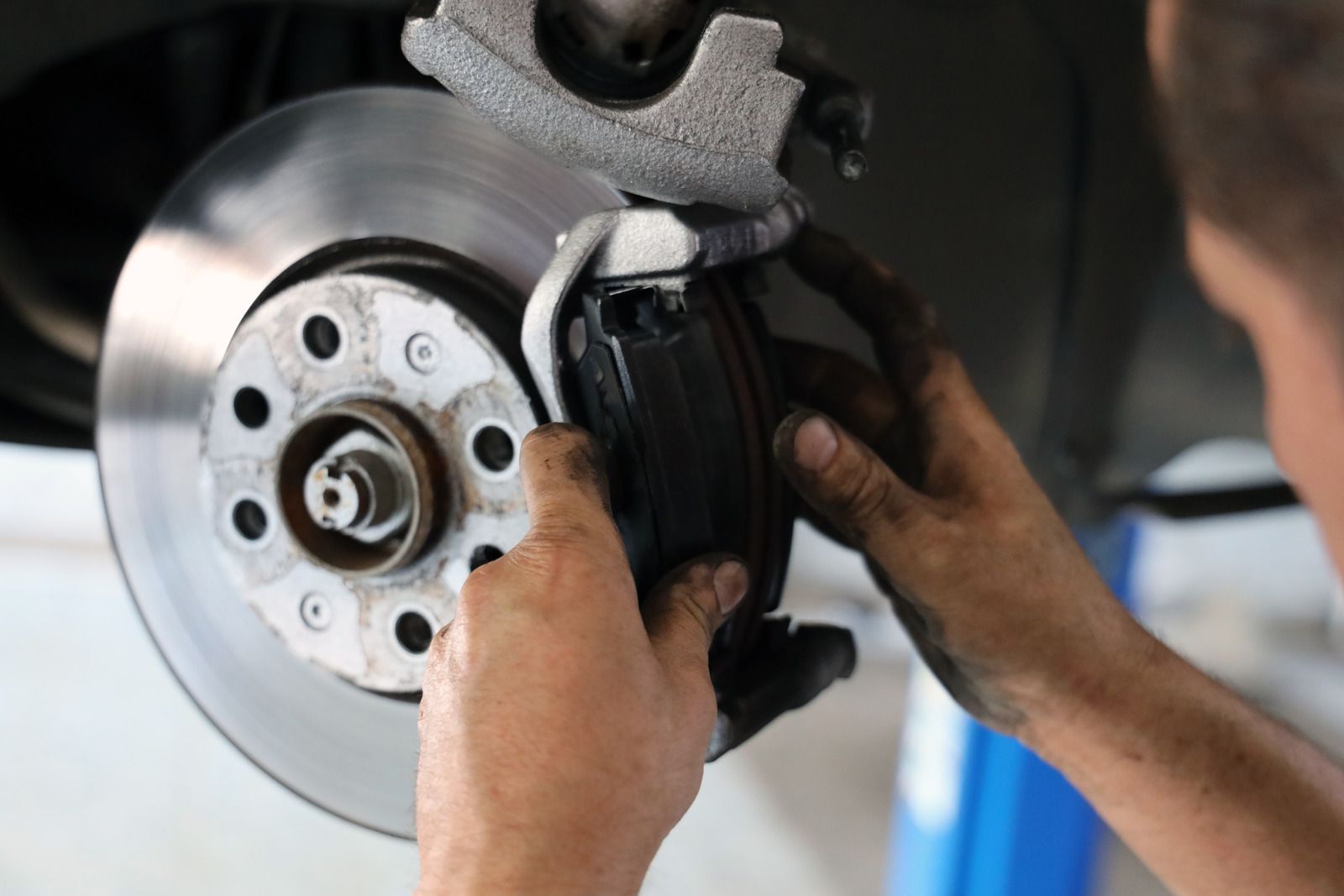
PAD REPLACEMENT
Brake Pad Replacement
Spent friction material comes off, hardware, and slide pins get cleaned and lubricated, and new pads go on with the rotor surface prepared to match. Pad depth is recorded so the next visit has a baseline.
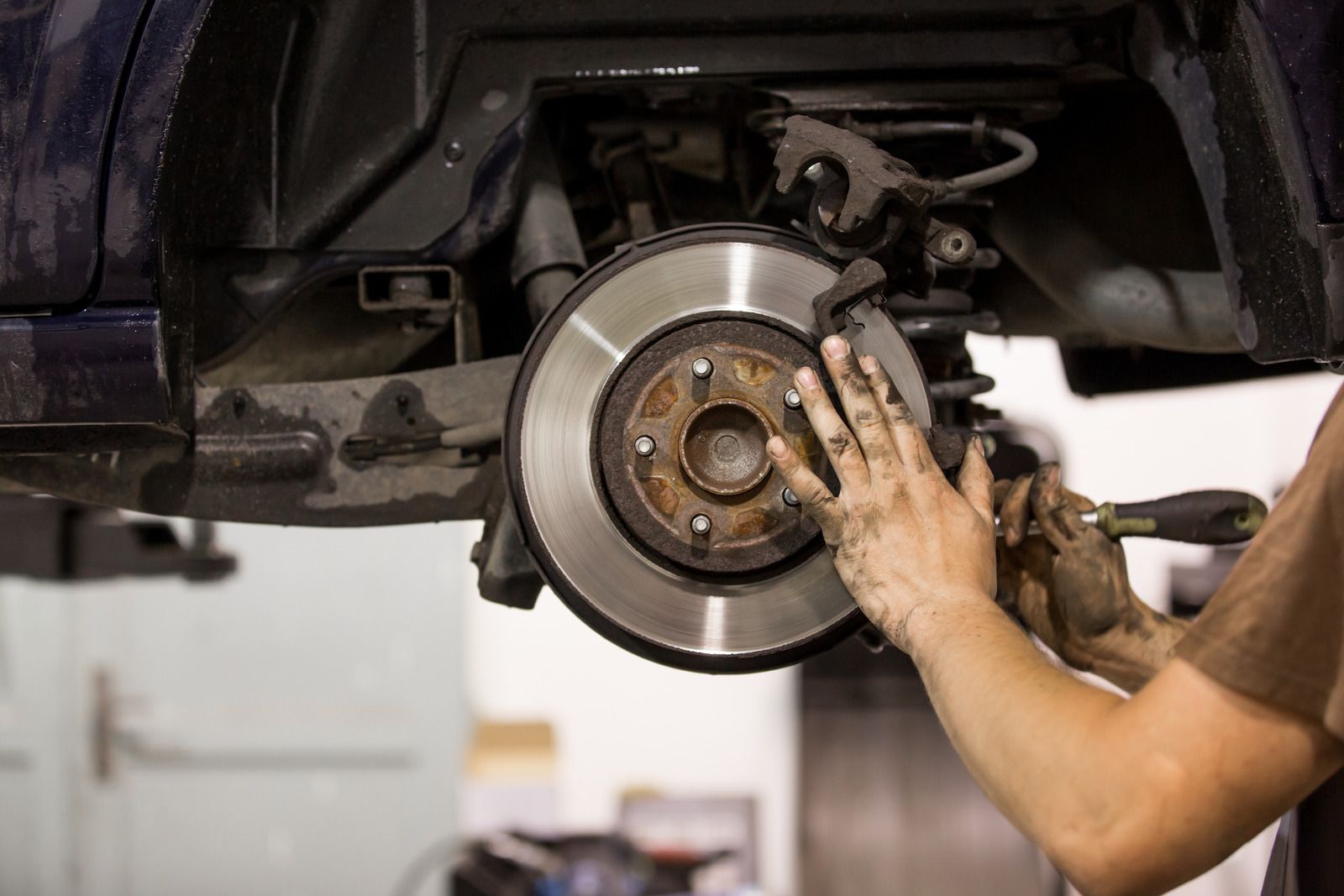
ROTOR SERVICE
Rotor Resurfacing And Replacement
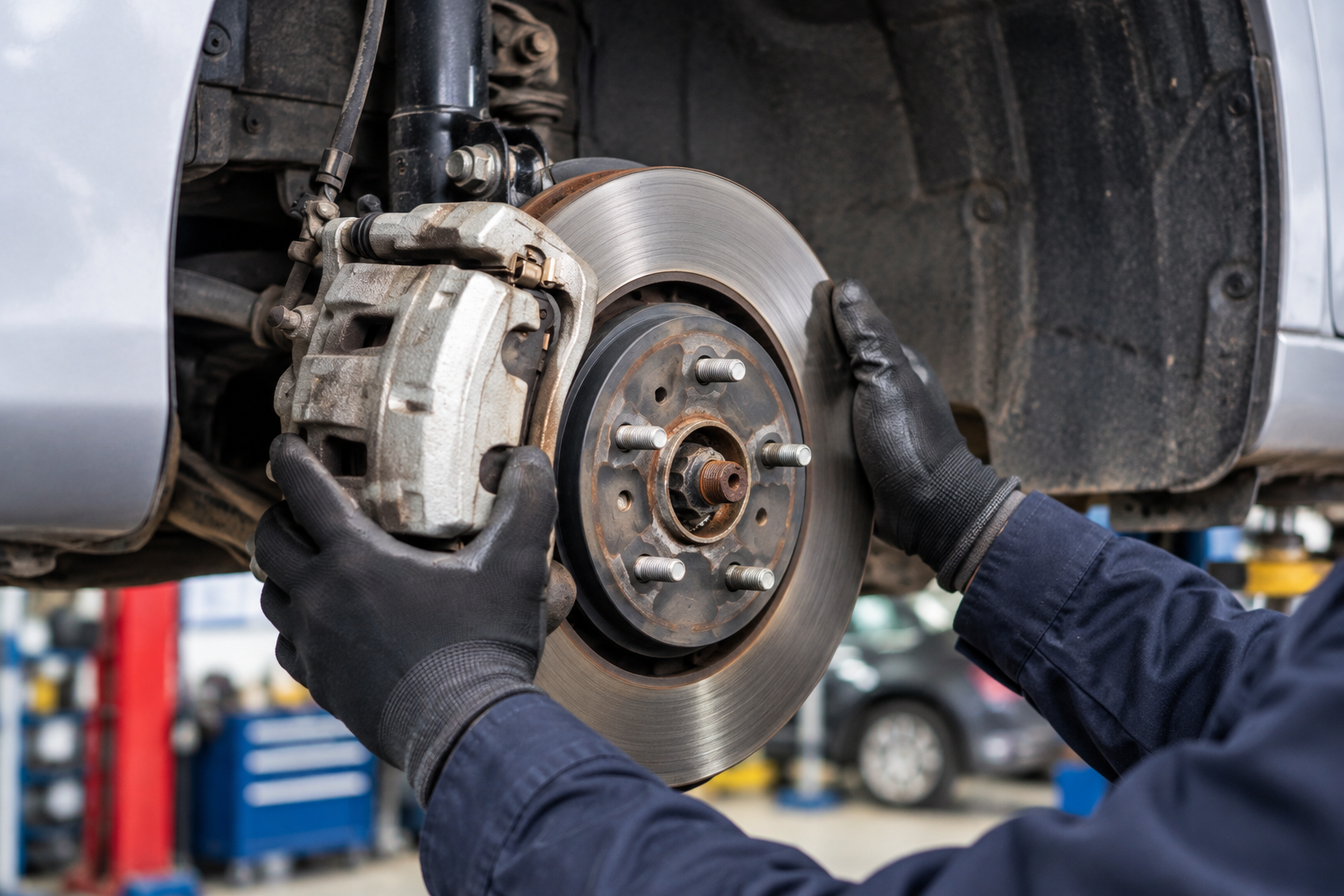
Each rotor gets measured against minimum thickness before anything is decided. Enough material left means resurfacing to a true, flat face. Below spec, or cracked and heat-scored, means replacement rather than a temporary fix.
CALIPER REPAIR
Caliper Service And Replacement
Sticking pistons and seized slide pins drag a pad against the rotor and cook one corner. We free, rebuild or replace calipers so both sides clamp and release the way the vehicle expects.
LINE REPAIR
Brake Line And Hydraulic Repair
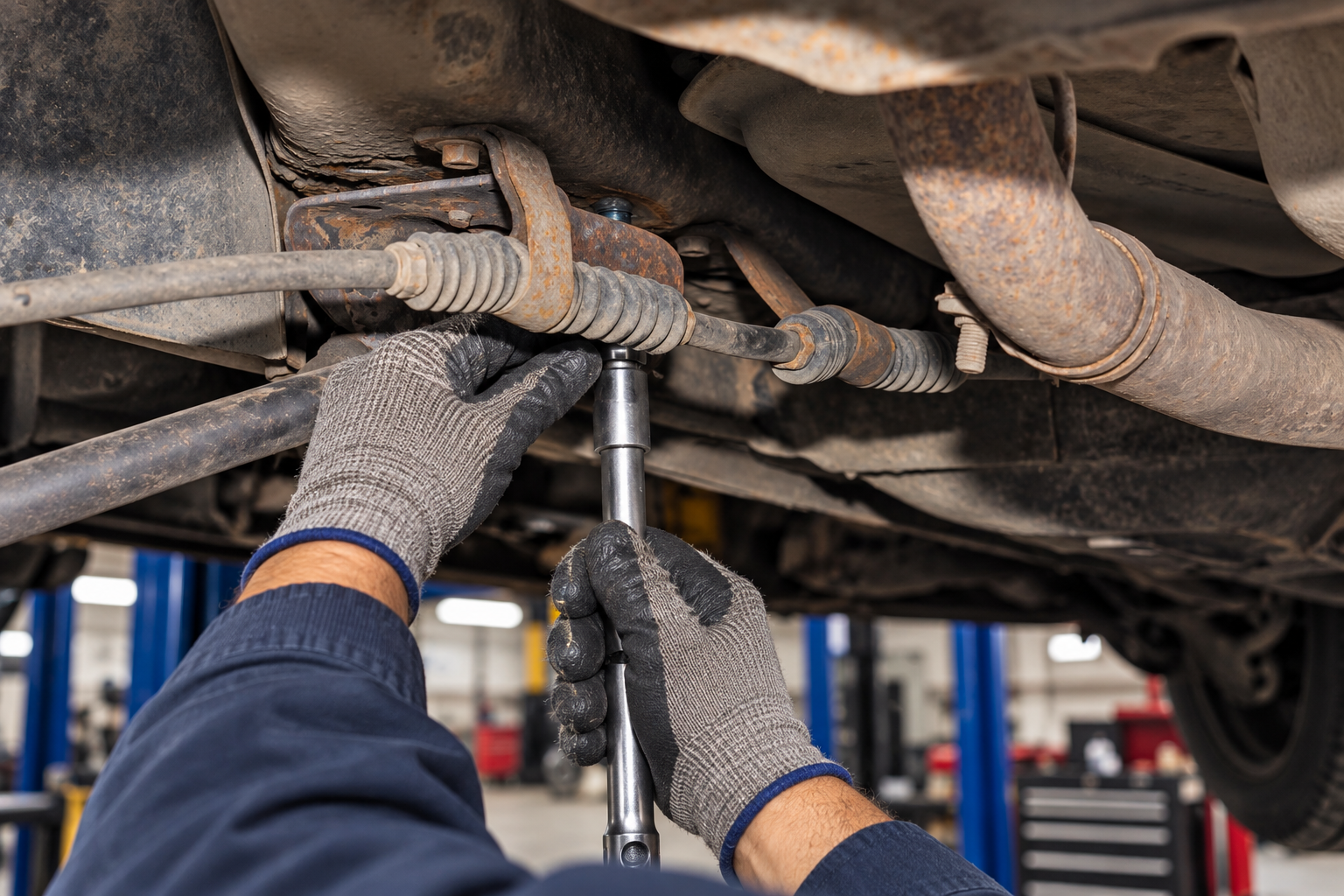
Steel lines corrode and flexible hoses swell with age, and either one softens the pedal or leaks pressure. Damaged sections get replaced and the system is bled until the pedal comes back firm.
FLUID SERVICE
Brake Fluid Inspection And Exchange
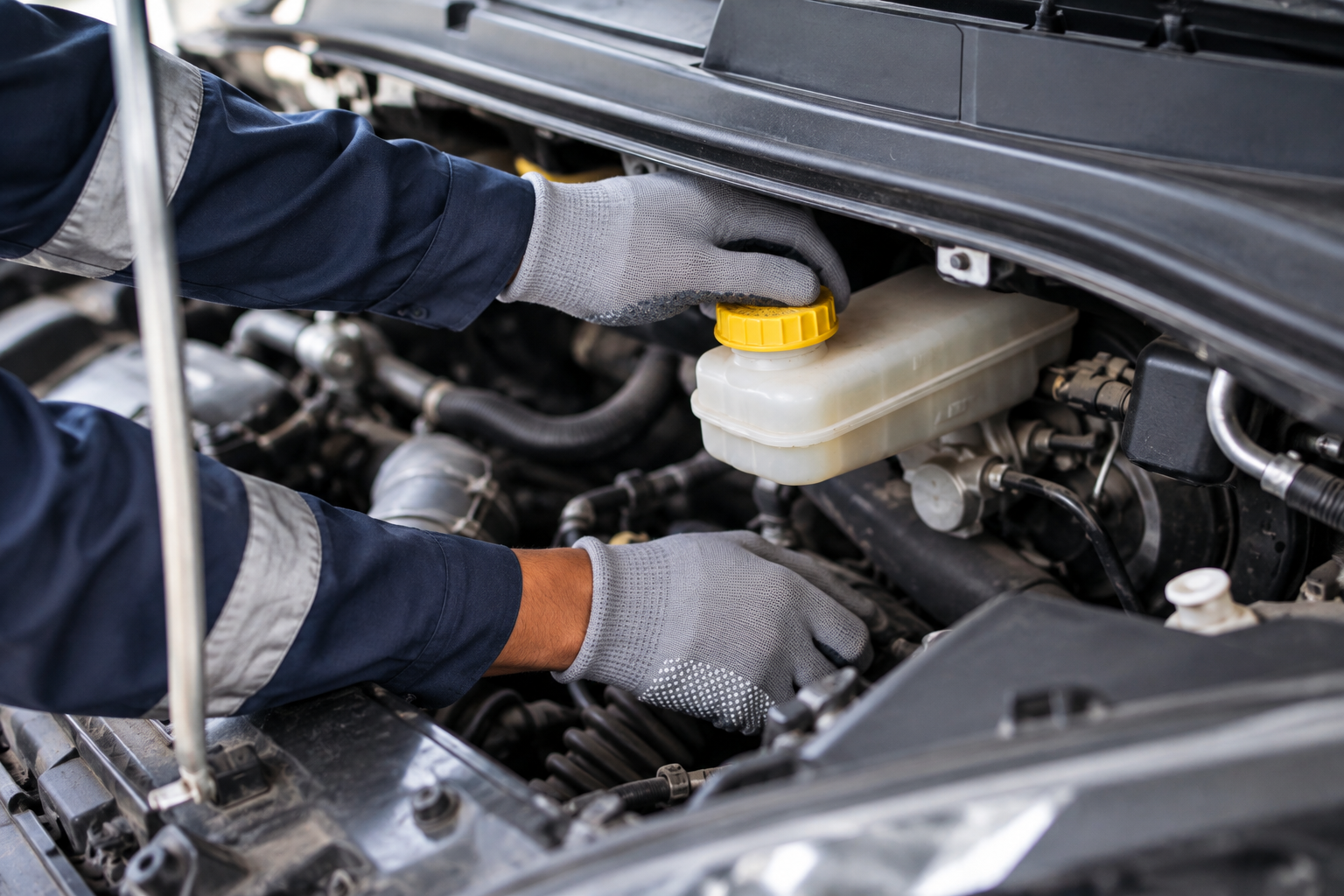
Moisture works into brake fluid over time, which drops its boiling point and darkens it. We check condition and level, then flush and refill with the specification your vehicle calls for. Old fluid does not get topped off.
NOISE DIAGNOSIS
Brake Noise And Pedal Diagnosis
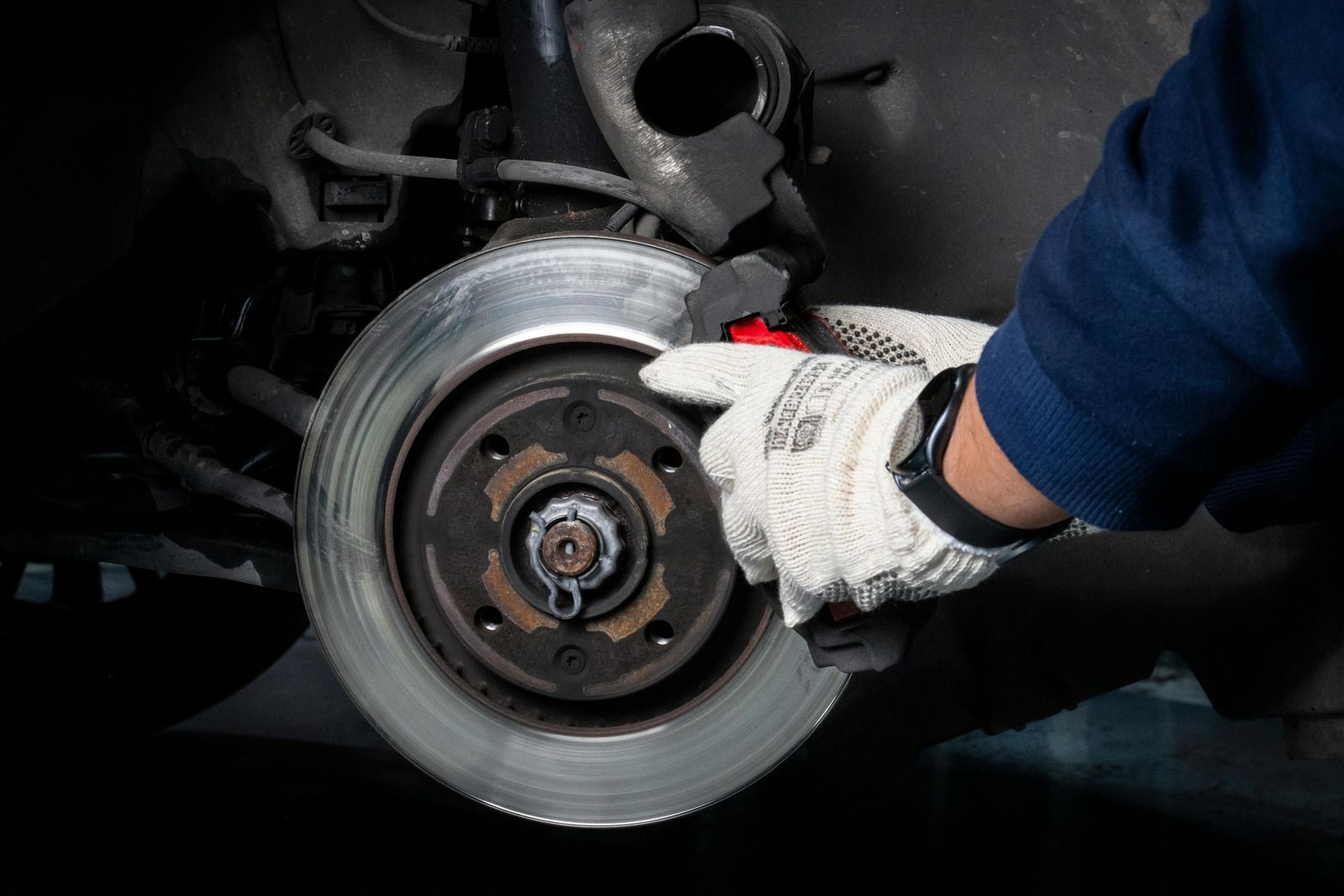
A squeal, a grinding note, a pulsing pedal or a long stop each point somewhere different. We reproduce the complaint on a road test, pull the wheels, and trace it to the part actually causing it.
THE WORD ON OUR WORK
WHAT OUR CLIENTS SAY.
Customers tell us the same things: parts ordered in the morning went on the same day, work came back ahead of the date we gave, and more than once somebody arrived expecting a brake bill and left without one because the pads were still good.
Common Questions
frequently asked
questions.
Questions about braking come up more than any other repair, and most of them have a straightforward answer. Here are the ones we field most often at the counter and on the phone.
Why are my brakes squealing?
Squealing usually comes from the wear indicator, a small metal tab that contacts the rotor once the pad gets thin. Glazed pads, dust, and hardware that has lost its lubrication can also sing. Grinding is different and more urgent.
How long do brake pads last?
Expect 25,000 to 70,000 miles from a set of pads, and 30,000 to 70,000 from rotors. Where you land depends on stop-and-go mileage, load, and pad compound. Measurement beats mileage, so we pull a wheel rather than read the odometer.
Can my rotors be resurfaced instead of replaced?
Sometimes. A rotor can be turned only if enough material remains above the minimum thickness cast into it, and the surface has to clean up without going below that figure. Cracks, deep scoring or hard spots mean replacement.
How often should brake fluid be changed?
Follow the interval in your owner's manual, which is usually time-based. Fluid absorbs moisture, which lowers its boiling point. M & A Auto Care checks fluid condition on every brake job in Pomona, CA and flushes when it reads dark or wet.
Why does my brake pedal feel soft or spongy?
Air or moisture in the hydraulic system is the usual cause, since both compress in a way brake fluid does not. A swollen flex hose, a small leak at a line fitting or a failing master cylinder can do it too.
How long does a brake job take?
Within a few hours, usually, once the vehicle is on the lift and the parts are on hand. A stuck caliper, a corroded line or a part that has to be ordered can push it later in the day.
What does the brake warning light mean?
Two different lights matter here. The red brake light usually means low fluid or an engaged parking brake, while the amber ABS light points at a wheel speed sensor or the ABS module. M & A Auto Care scans both in Pomona, CA.
Is it safe to drive with worn brake pads?
Not for long. Once the friction material is gone, metal backing contacts the rotor, stopping distance stretches, and rotor damage turns a pad job into a pad and rotor job. Grinding means stop driving and book it right away.
HOW WE WORK
HOW A BRAKE REPAIR GOES HERE.
STEP 01
Listen To The Complaint
You tell us what changed: the noise, when it happens, whether the pedal feels different, how the car behaves at a stop sign versus a freeway offramp. That description narrows the inspection before a wheel comes off.
STEP 02
Road Test The Symptom
Before the lift, we drive it. Noise, pedal travel, pulsation, and stopping distance show up on the road in ways they never do in the bay, and we want the complaint reproduced first rather than described secondhand.
STEP 03
Pull The Wheels And Measure
All four wheels come off. Pad thickness gets measured, rotor thickness is checked against the minimum stamped on the hat, and calipers, hoses, hardware, and fluid condition are inspected while everything is open and easy to reach.
STEP 04
Quote The Work In Writing
State law requires a written estimate and your authorization before work begins, and no shop may exceed that estimate without your consent. We walk you through the numbers, the options, and what can safely wait until later.
STEP 05
Replace And Bleed The System
Approved parts go on, hardware gets cleaned and lubricated, torque comes from a wrench rather than an impact gun, and the hydraulic system is bled until the pedal is firm and travel is where it belongs.
STEP 06
Bed The Brakes And Verify
New pads and rotors need a controlled series of stops to transfer friction material evenly. We do that on a final road test, confirm the pedal and stopping distance, then hand back the keys and the old parts.
GET YOUR FREE ESTIMATE
GET YOUR BRAKE INSPECTION AND ESTIMATE, FREE.
Book an appointment or send us the details through our quote form, and we will measure what you have before quoting anything. Estimates cost nothing, financing is available, and paying with cash takes 4% off the total.
WHAT YOUR BRAKE ESTIMATE COVERS:
- Pad thickness measured at each wheel
- Rotor thickness compared to minimum specification
- Caliper, hose, and hardware condition
- Brake fluid level and color
- Road test notes on pedal feel
- Written estimate before any work