Drivetrain Repair
DRIVETRAIN REPAIR IN Pomona, CA
A hard pothole or curb strike is enough to warrant an alignment check, and the same impact travels straight through the axles, CV joints, and driveshaft that carry power to your wheels. M & A Auto Care handles drivetrain repair in Pomona, CA, covering driveshaft and universal joint wear, differential noise, axle and CV joint failure, and vibration or clunk diagnosis on domestic and import vehicles. Inspections come with a free estimate and an explanation before any work is approved.
POWER HAS TO REACH THE PAVEMENT.
Between the transmission and the tires sits a chain of parts that most drivers never think about until one of them speaks up. A driveshaft with a tired universal joint sets up a vibration that grows with speed. A torn CV boot lets grease out and grit in. A differential low on lubricant starts to howl.
Each of those sounds has a location and a speed range attached to it. Our drivetrain inspections match the noise to the component, on the lift and on the road, before parts are named.
- Driveshaft and universal joint inspection
- Differential noise and lubricant checks
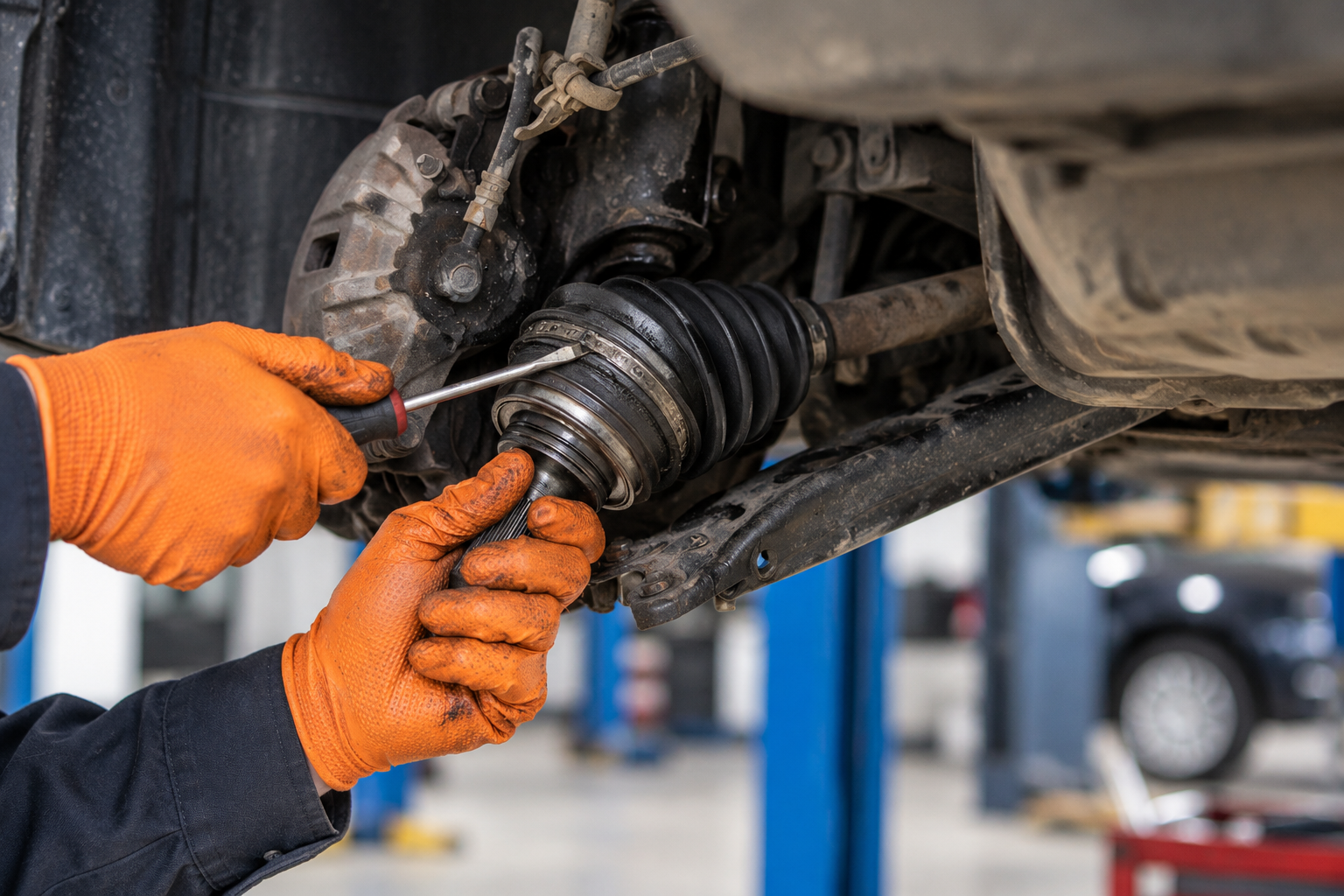
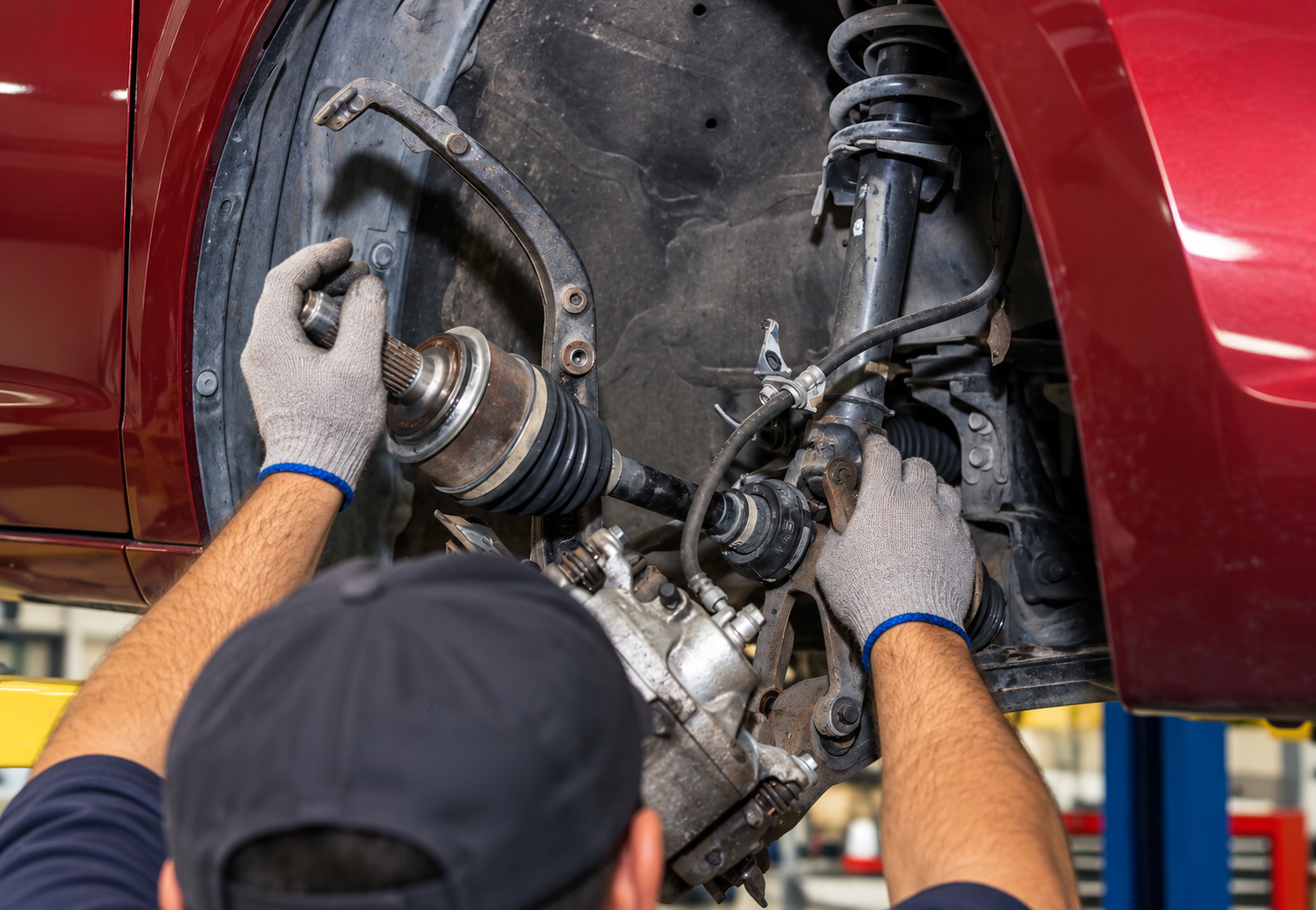
- Axle and CV joint service
- Vibration diagnosed by speed range
DRIVETRAIN REPAIR
VIBRATION AND CLUNKS HAVE ADDRESSES.
Sound tells us where to start looking. A clunk on takeoff points at joints and mounts. A vibration that arrives at 55 and worsens at 70 points at driveshaft balance or a universal joint. A click on a slow turn points at an outer CV joint. Our technicians confirm each one on the lift, then verify the fix on the road before handing the keys back to you.
POMONA COMMUTES PUT MILES ON EVERY JOINT.
Freeway miles on the 210 and the 71 spin a driveshaft millions of times without much drama, but the stop-and-go stretches load axles and joints hard every time you pull away from a light. Add a hard pothole or a curb strike, and boots tear or balance shifts. Both patterns show up in the drivetrain work that we see from local drivers every week.
NOISE UNDER THE FLOOR IS OUR LANGUAGE.
Rear differentials, front axles, universal joints, half shafts: 35 years of listening to them has taught us that a howl, a whine, a click, and a clunk each mean something different. We ride along when the noise is hard to describe. Then we duplicate it on the lift, load the joint by hand, and show you the play instead of describing it. Play you can feel is play you can understand.
WHY CHOOSE US FOR DRIVETRAIN REPAIR.
NOISE GETS MATCHED TO A PART
Guessing at a clunk means replacing parts that were fine. Matching the sound to a speed, a turn, or a gear change puts your money on the component that actually failed.
TORN BOOTS CAUGHT BEFORE JOINTS DIE
Boots split quietly. A CV boot that tore last month is a cheap repair today and a full axle tomorrow, so every inspection includes a boot check before small tears become large bills.
FRONT AND REAR WHEEL DRIVE BOTH
Half shafts and CV joints on one layout, driveshaft and differential on the other, and all-wheel drive borrows from both. Whatever your vehicle uses, the inspection covers the parts it actually has.
YOU SEE THE PLAY YOURSELF
Wear in a universal joint or an axle shows up as movement you can feel by hand. We put your vehicle on the lift and let you feel it before approving anything.
ROAD VERIFIED AFTER EVERY REPAIR
Fixing vibration means it is gone at the speed where it appeared. The same stretch of road that produced the complaint gets driven again once the parts are in.
NATIONWIDE WARRANTY ON INSTALLED PARTS
Most products installed here carry a nationwide warranty of 2 years or 24,000 miles, so an axle or joint replaced today still counts if trouble finds you away from home.
WHAT WE SERVICE
OUR DRIVETRAIN REPAIR WORK.
Drivetrain work covers everything that moves power from the transmission out to the wheels. Below are the components inspected, tested, and repaired here, each one confirmed by hand and by road test before replacement is recommended.
DRIVESHAFT WORK
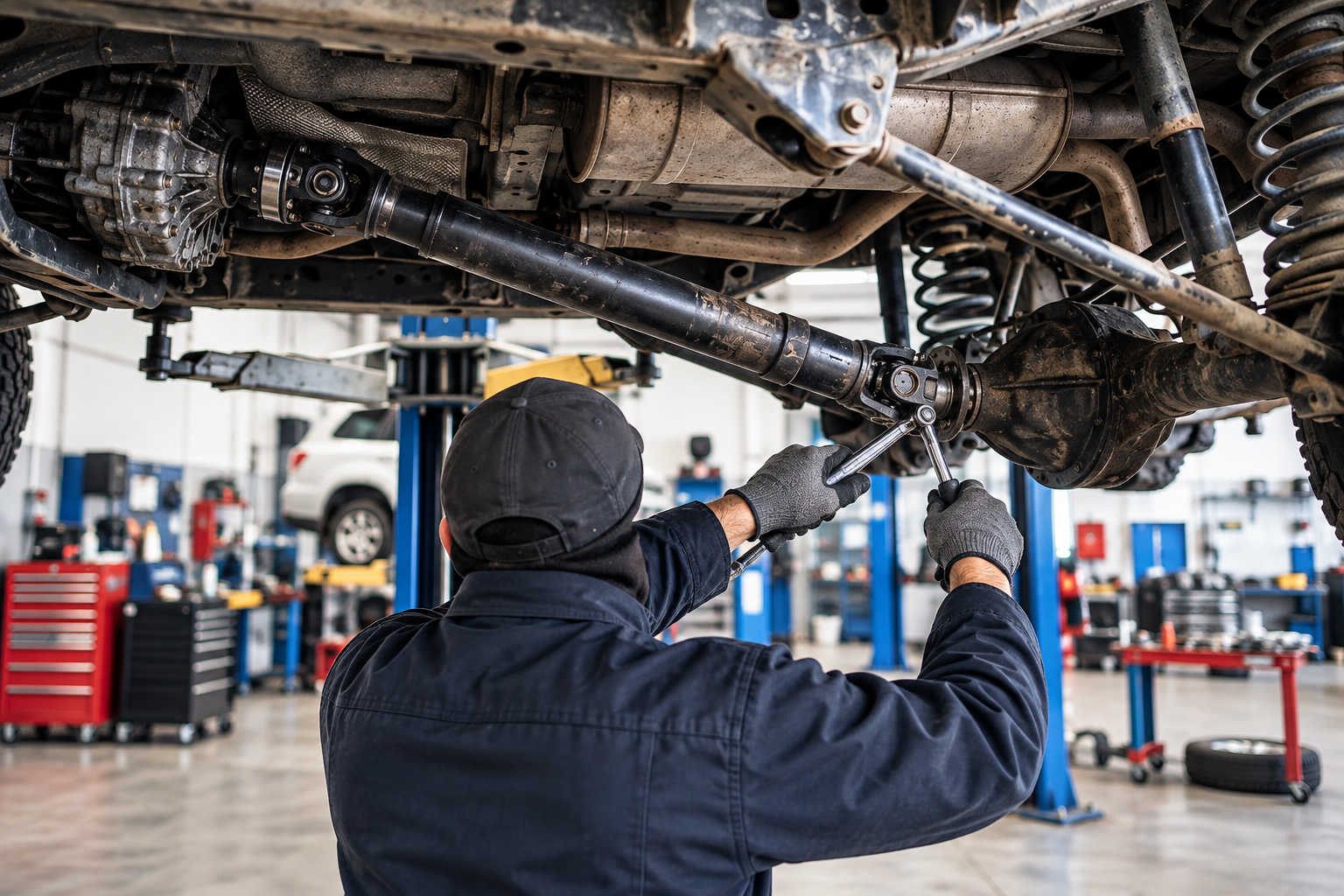
Driveshaft Inspection And Repair
Runout, balance, center support condition, and slip yoke play all get checked, because any one of them can produce a vibration that rises with road speed. Findings are shown to you before parts are ordered.
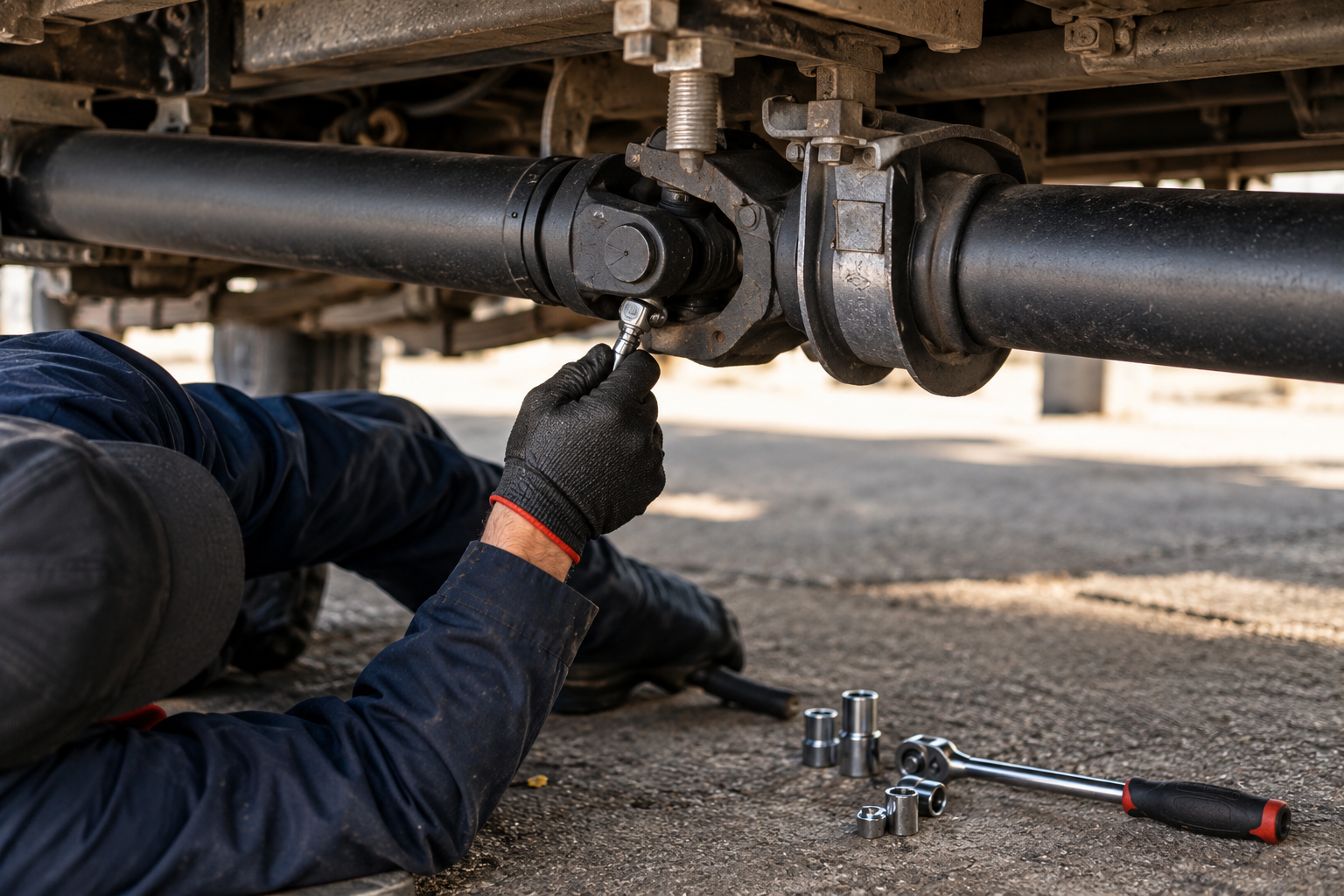
JOINT SERVICE
Universal Joint Replacement
Universal joints wear into a notchy, rusty feel long before they fail outright. Checking them by hand on the lift catches the roughness early, which keeps a cheap joint from taking a driveshaft with it.
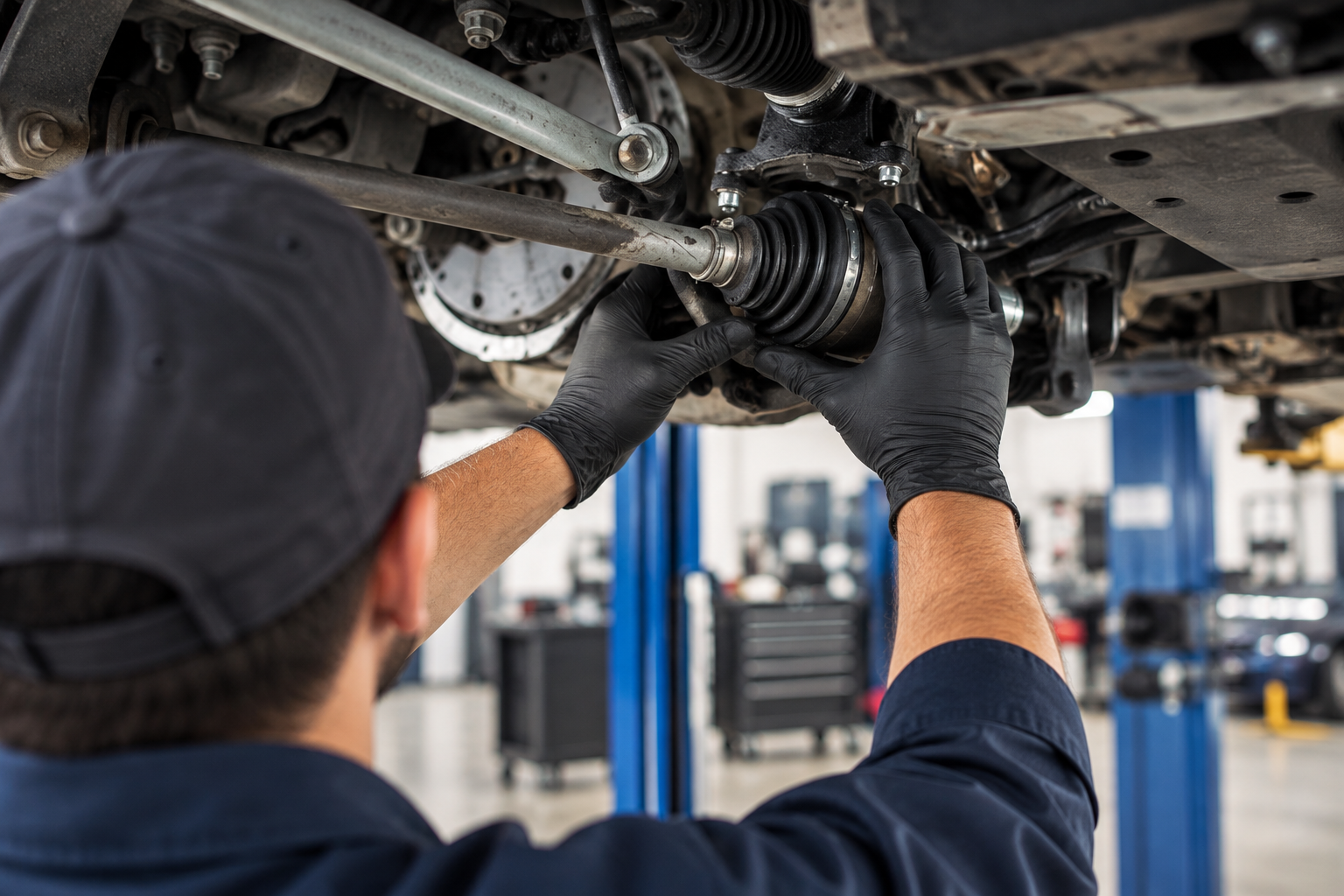
AXLE REPAIR
Axle Shaft Service
Bent, splined or leaking axles get identified during inspection, along with the growl or grinding that often travels with them. Replacement follows manufacturer specifications, and the wheel end is retorqued and rechecked after the road test.
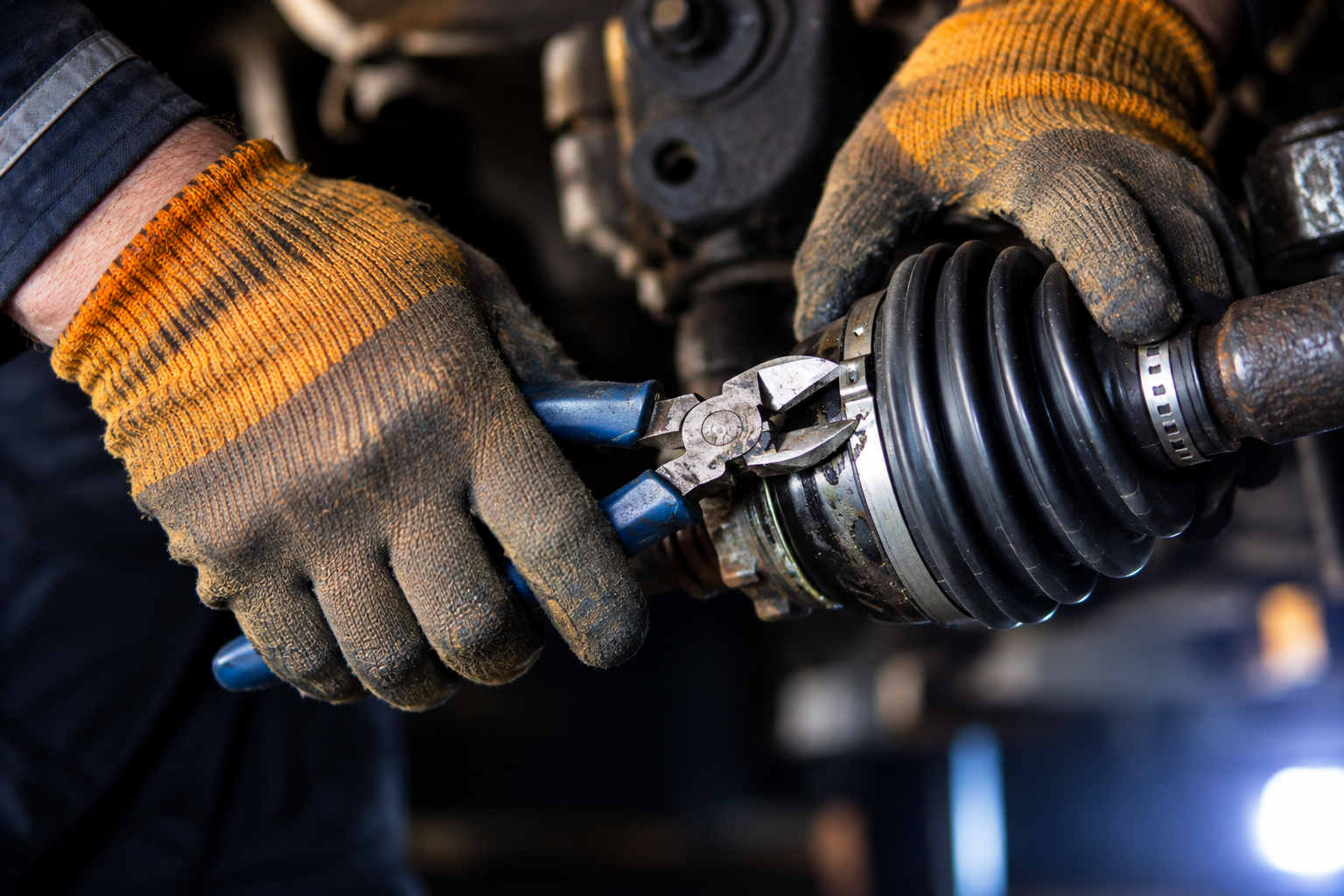
CV JOINTS
CV Joint And Boot Repair
Grease sprayed inside a wheel well and a click on a tight turn both point here. Boots get inspected on every drivetrain check, and a joint that has run dry is replaced rather than repacked.
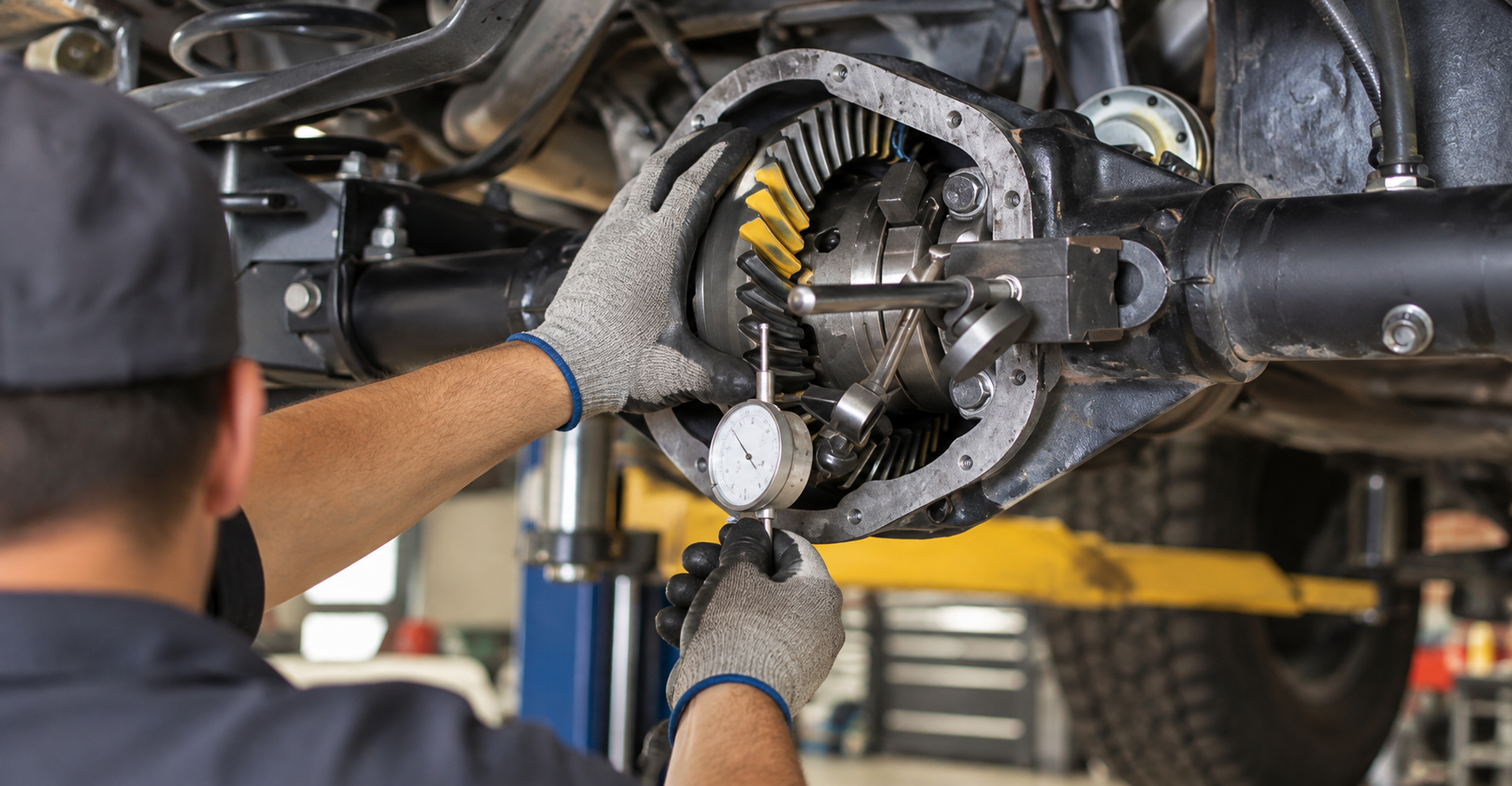
DIFFERENTIAL CARE
Differential Inspection And Repair
Low lubricant, worn gears, and case leaks each produce a different sound: a howl under acceleration, a whine on deceleration, or a clunk when a gear engages. Level, condition, and backlash get checked before internal work is proposed.
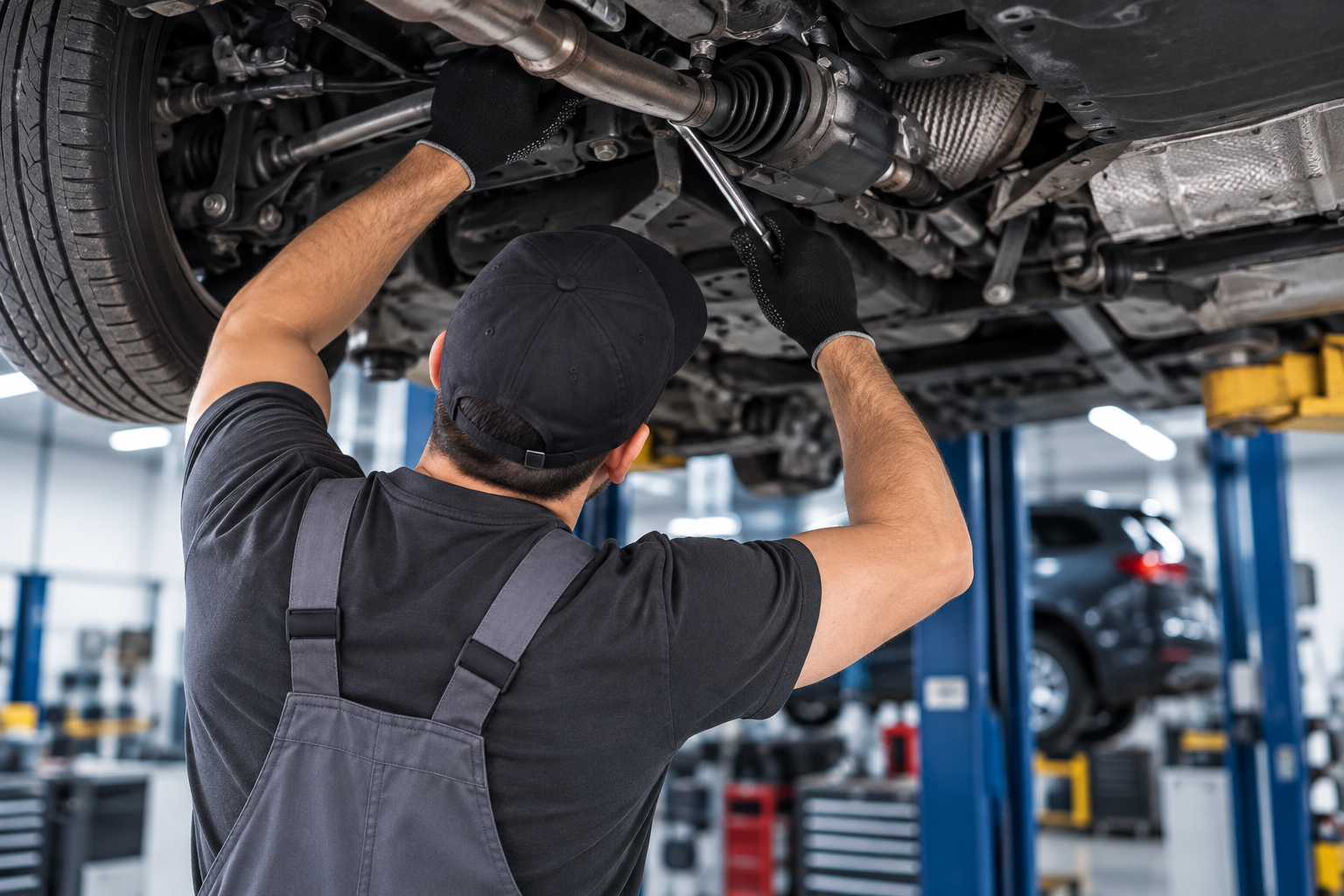
FULL INSPECTION
Complete Drivetrain Inspection
Every component from the transmission output to the wheel hubs gets a look: mounts, shafts, joints, boots, seals, and lubricant. You receive the findings in writing, with the urgent items separated from what can wait.
THE WORD ON OUR WORK
WHAT OUR CLIENTS SAY.
Customers mention two things most often: parts that came in got installed the same day, and jobs finished ahead of the estimated date. Others tell us they came in braced for a big repair and were told a component still had life left.
Common Questions
frequently asked
questions.
Below are the drivetrain questions drivers bring in most, mostly about noises they cannot place. Each answer explains what the symptom usually means and how the cause gets confirmed.
Why does my car click when I turn?
Clicking that shows up on a slow, tight turn almost always points to a worn outer CV joint, usually after the boot tore and the grease escaped. Inspection confirms it, and replacing the axle assembly is the normal repair.
What causes vibration at highway speed?
Vibration that appears above 50 and worsens as you go faster usually comes from driveshaft balance, a worn universal joint, or a bent axle. Tire balance and wheel problems can mimic it, so both areas get checked together.
Is a torn CV boot worth fixing right away?
Yes, because a split boot throws out grease and lets road grit into the joint, which turns a small repair into an axle replacement. M & A Auto Care in Pomona, CA checks boots on every drivetrain inspection.
What does a howling differential mean?
Howling under load usually signals low or contaminated lubricant, worn gears, or a failing bearing inside the housing. The pitch and when it appears narrow the cause, so we drive the vehicle and then inspect the fluid and case.
How do I know if a universal joint is failing?
Rust-colored dust around the joint caps, a clunk when shifting between drive and reverse, and a shudder on acceleration are the common signs. On the lift, a failing joint feels notchy or loose when the shaft is twisted by hand.
What does a drivetrain inspection cover?
Driveshaft runout and balance, universal joints, axles, and CV boots, differential lubricant, seals, and mounts all get examined on the lift and confirmed by road test. M & A Auto Care in Pomona, CA gives you the findings in writing.
Do front-wheel drive and rear-wheel drive wear differently?
Front-wheel-drive vehicles put steering, driving, and most of the vehicle weight through the same set of joints, so CV boots and axles wear out first. Rear-wheel drive spreads that load, but it adds a driveshaft, universal joints, and a differential to watch.
Why does my car clunk when I shift into gear?
Clunking on engagement usually comes from worn universal joints, excessive differential backlash, or tired mounts letting the drivetrain move before it loads. Each has a different feel, so we check play at every joint and mount before recommending parts.
HOW WE WORK
TRACING A NOISE TO ITS SOURCE.
STEP 01
Ride Along With The Symptom
Describing a clunk is hard, so we ask you to point it out on the road when possible. Speed, throttle position, and steering angle at the moment it appears narrow the search immediately. Nothing gets replaced on a description alone.
STEP 02
Lift And Load Each Joint
On the lift, universal joints, CV joints, and axles get moved by hand under load. Play that cannot be felt from the seat becomes obvious here, and you are welcome to feel it yourself before anything is approved.
STEP 03
Inspect Boots And Seals
Every boot, seal, and case surface gets wiped clean and then examined for grease, gear oil or road grit. A tear found early is the difference between a boot repair and a full axle assembly later on.
STEP 04
Check Differential Fluid
Lubricant comes out on a finger for a look at color, smell, and any metal it carries. Level, case leaks, and backlash are recorded, because those readings decide whether the housing ever needs to be opened.
STEP 05
Sort Urgent From Optional
Findings arrive sorted: what is unsafe now, what is wearing but stable, and what can wait for the next visit. A free estimate covers the recommended work in plain language, and nothing proceeds without your approval.
STEP 06
Replace And Re-Verify On Road
Approved parts go in to manufacturer specifications, fasteners get torqued, and lubricant is filled to the correct level. Then the vehicle returns to the same road and the same speed that produced the complaint in the first place.