Transmission Repair
TRANSMISSION REPAIR IN Pomona, CA
Pomona sits where the 10, the 57, the 71 and the 210 meet, so a large share of local miles are stop-and-go commuting miles, and every one of them runs through your gearbox. M & A Auto Care handles transmission repair in Pomona, CA with fluid condition checks, leak inspection at seals, gaskets, and cooler lines, code retrieval, and a road test that tells us how the unit actually shifts. Repairs are then matched to manufacturer specifications, automatic or manual.
SHIFT PROBLEMS START SMALL AND GET LOUD.
A transmission rarely fails without warning. It slips for a second on the 1-2 shift, or it hunts between gears on a warm afternoon, or it thumps into drive after sitting overnight. Those early signals show up in fluid that has darkened, in a level that has dropped, and in stored codes that point at solenoid and pressure faults.
We read the fluid first, because burnt fluid and a low level explain a surprising number of complaints. Then we drive the vehicle, log what the transmission does under load, and show you the findings.
- Fluid condition and level checked
- Leaks traced to seals and gaskets
- Stored transmission codes pulled and tested
- Road test before and after
TRANSMISSION REPAIR
A TRANSMISSION TELLS YOU WHAT IS WRONG.
Diagnosis starts with what the fluid looks and smells like, what the pan and cooler lines are doing, and what the computer has stored. Automatic units get pressure and shift-quality evaluation on the road. Manual units get a clutch inspection, pedal travel check, and a look at the linkage. From there we recommend the smallest repair that fixes the fault, and we explain it before anything is approved.
STOP-AND-GO MILES ARE HARD ON POMONA GEARBOXES.
Commuting between the 10 and the 57 means constant shifting, and constant shifting means heat. August highs near 92 degrees push fluid temperatures higher still, and heat is what breaks fluid down. That is why coolant lines feeding the transmission cooler get inspected here, and why we check fluid condition on vehicles that have never left the valley but have piled on city miles.
NOT EVERY SLIPPING TRANSMISSION NEEDS REPLACING.
Over 35 years we have seen slipping traced to a plugged filter, a leaking cooler line, a failed solenoid, and fluid that was simply overdue. We have also seen units that were genuinely finished. The difference is testing, not guessing, and our technicians work with modern diagnostic equipment so the answer comes from data. Minor repairs often take a few hours, while a rebuild or replacement can run a day or more.
WHY CHOOSE US FOR TRANSMISSION REPAIR.
YOU SEE THE FLUID WE PULLED
Burnt fluid on a rag is easier to understand than a paragraph. We show you what came out of your transmission and what fresh fluid should look like beside it.
REPAIRS SIZED TO THE ACTUAL FAULT
Replacing a whole unit when a solenoid failed costs you money you did not need to spend. Testing first keeps the repair honest and keeps your bill tied to the real problem.
AUTOMATIC AND MANUAL BOTH WELCOME
Clutch pedals and torque converters get the same attention here. Whichever your vehicle runs, you get an inspection, a clear explanation of wear, and advice on what to do next.
A ROAD TEST, NOT A GUESS
Shift complaints happen at speed, under load, and at operating temperature. Driving your vehicle the way you already drive it is how symptoms get confirmed instead of assumed.
WORK MATCHED TO FACTORY SPECIFICATIONS
Torque values, fluid type, and fill level are not suggestions. Every repair goes back together to manufacturer specifications, which is what keeps a fixed transmission fixed after you leave.
APPROVAL BEFORE ANY WORK STARTS
Nothing gets opened, drained, or ordered until you have heard the findings and said yes. Free estimates mean you can get a second look without paying for the privilege.
WHAT WE FIX
OUR TRANSMISSION REPAIR WORK.
Transmission work here stays inside what testing supports: fluid, leaks, codes, shift quality, clutch condition, and repairs put back to manufacturer specifications. Each item below starts with an inspection and a conversation about findings.
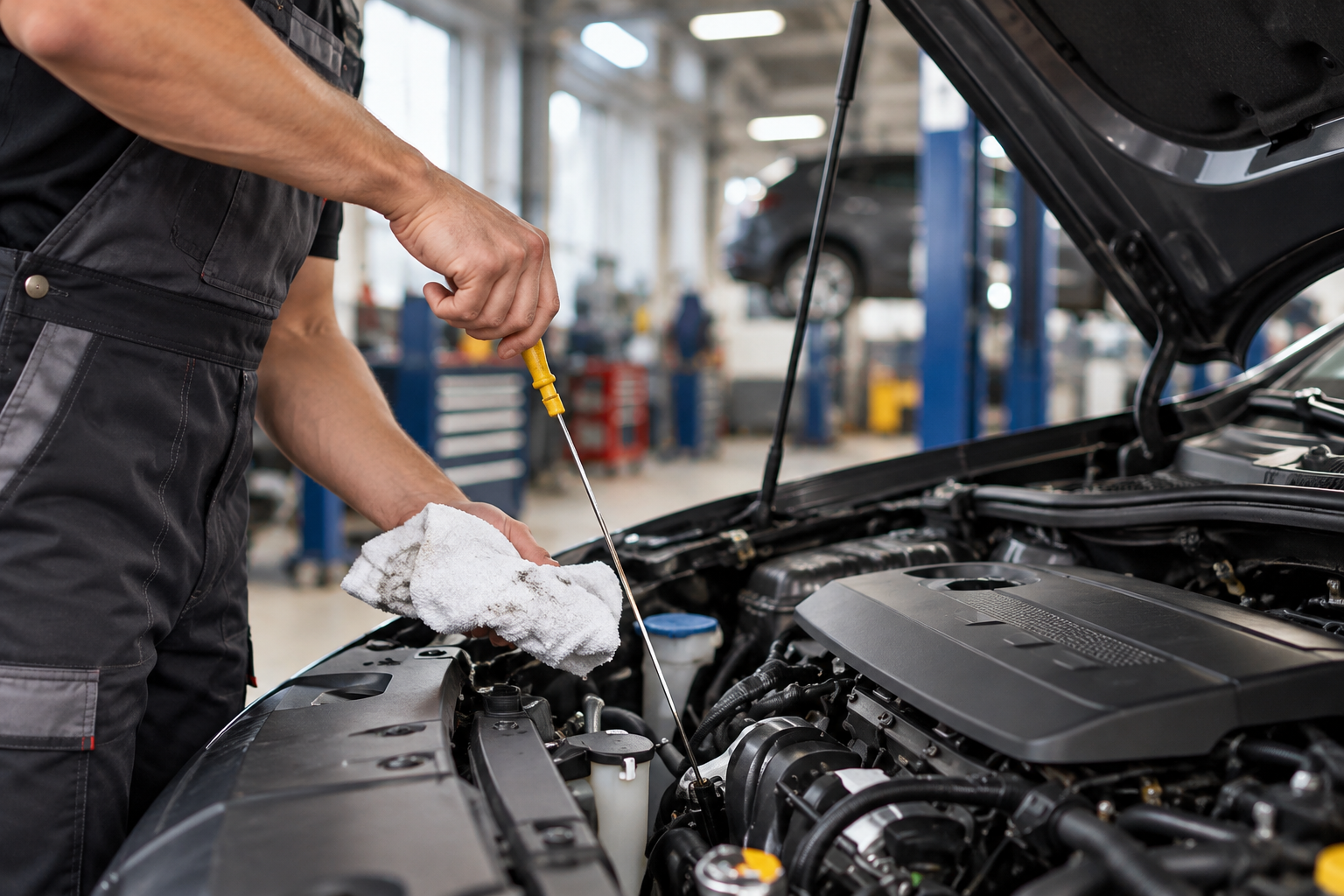
FLUID CHECK
Transmission Fluid Inspection And Service
Level, color, and smell get checked against what the manufacturer calls for. Dark or burnt fluid, or a level that keeps falling, changes the direction of the diagnosis before any part is named.
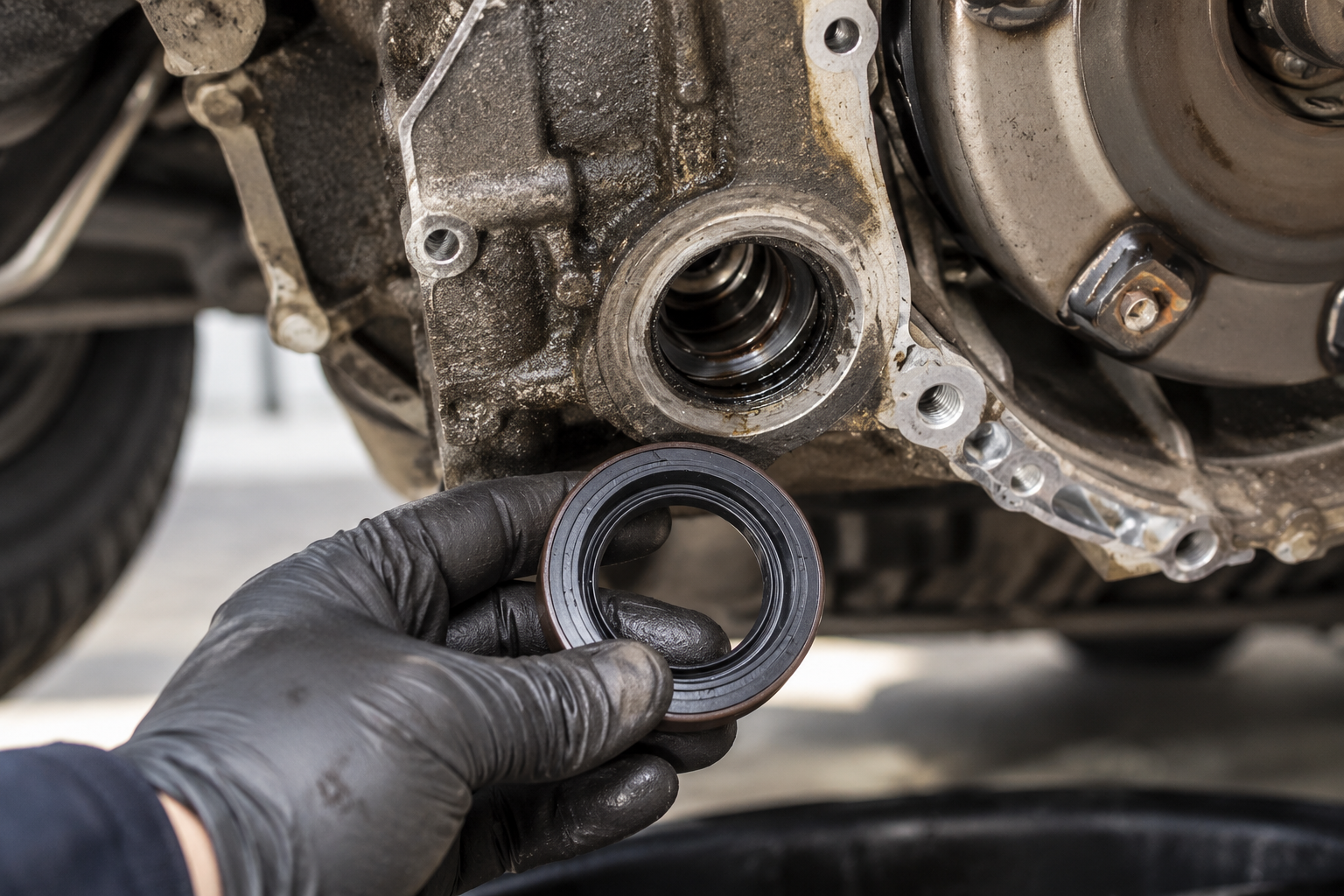
LEAK TRACE
Seal, Gasket And Cooler Line Leaks
Fluid on the driveway is the last clue, not the first. Pan gaskets, axle and pump seals, and the cooler lines running to the radiator all get inspected, cleaned, and rechecked to find the real source.
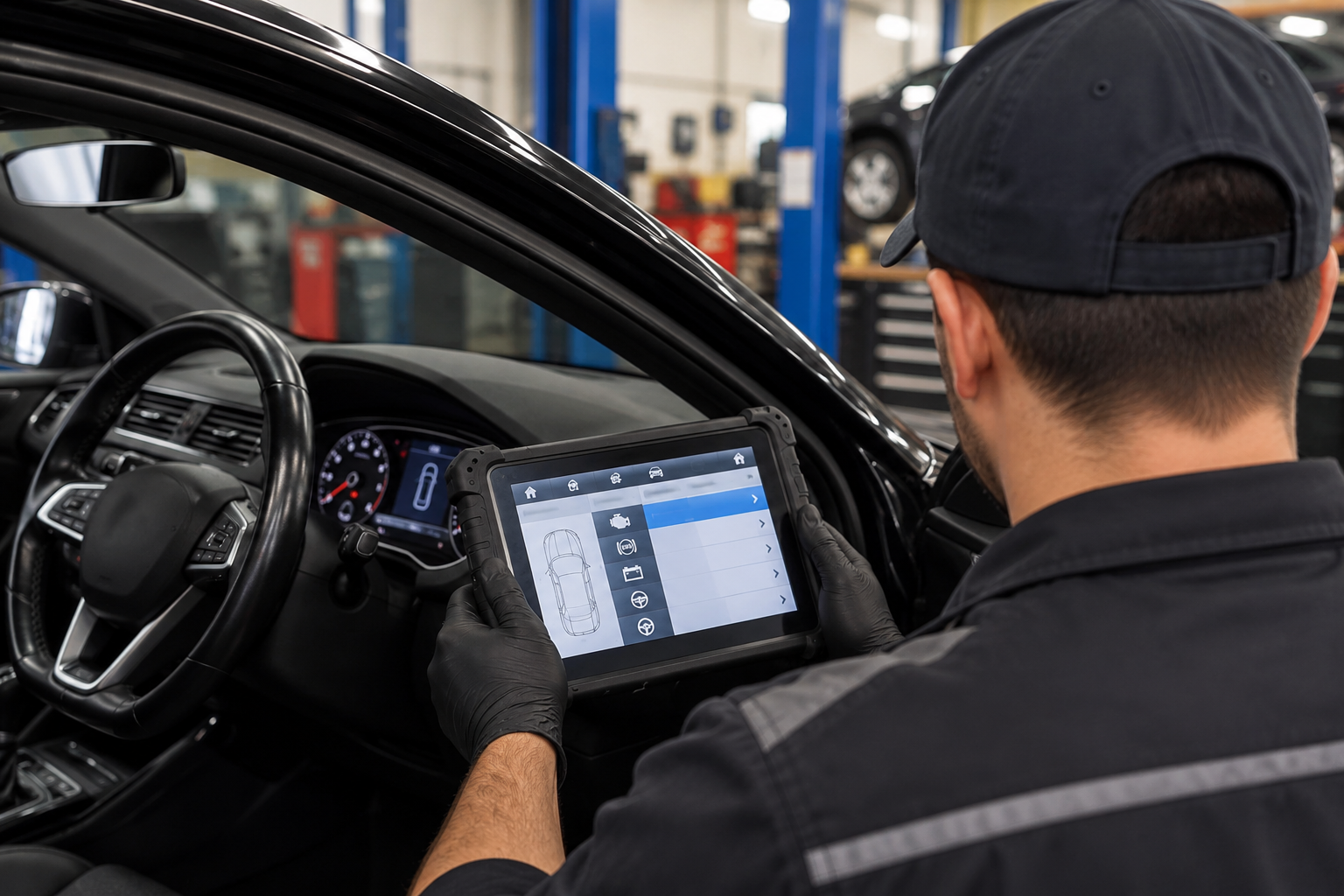
CODE SCAN
Transmission Trouble Code Diagnosis
Stored codes name a circuit, a range, or a ratio error, not usually a part. Modern diagnostic equipment lets us watch live data while the vehicle shifts, so the code gets confirmed rather than assumed.
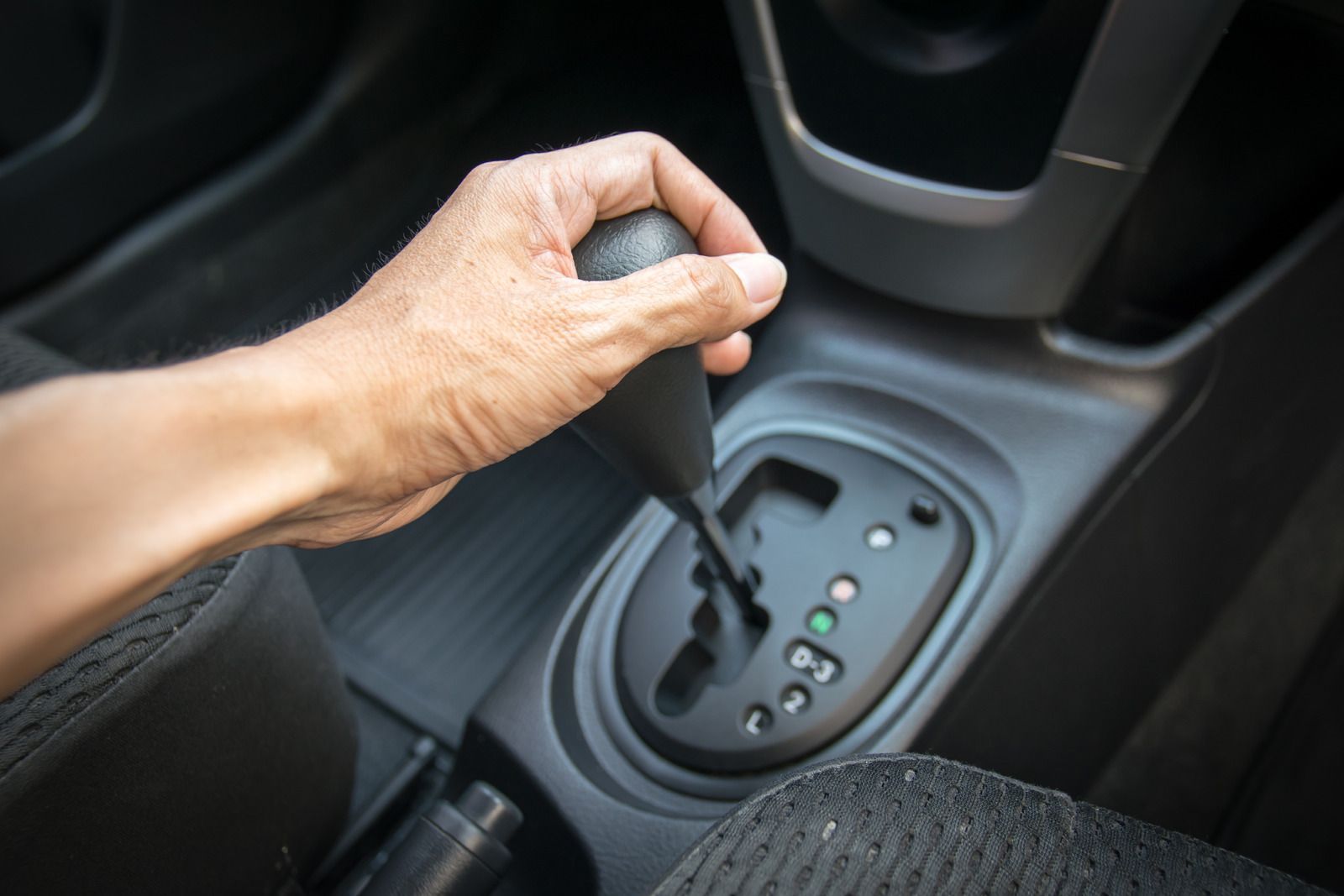
SHIFT QUALITY
Road Test And Shift Evaluation
Every transmission complaint gets driven before and after. Upshifts, downshifts, engagement into reverse, part-throttle behavior, and manners at freeway speed are logged, then repeated once the repair is finished so you can feel the difference yourself.
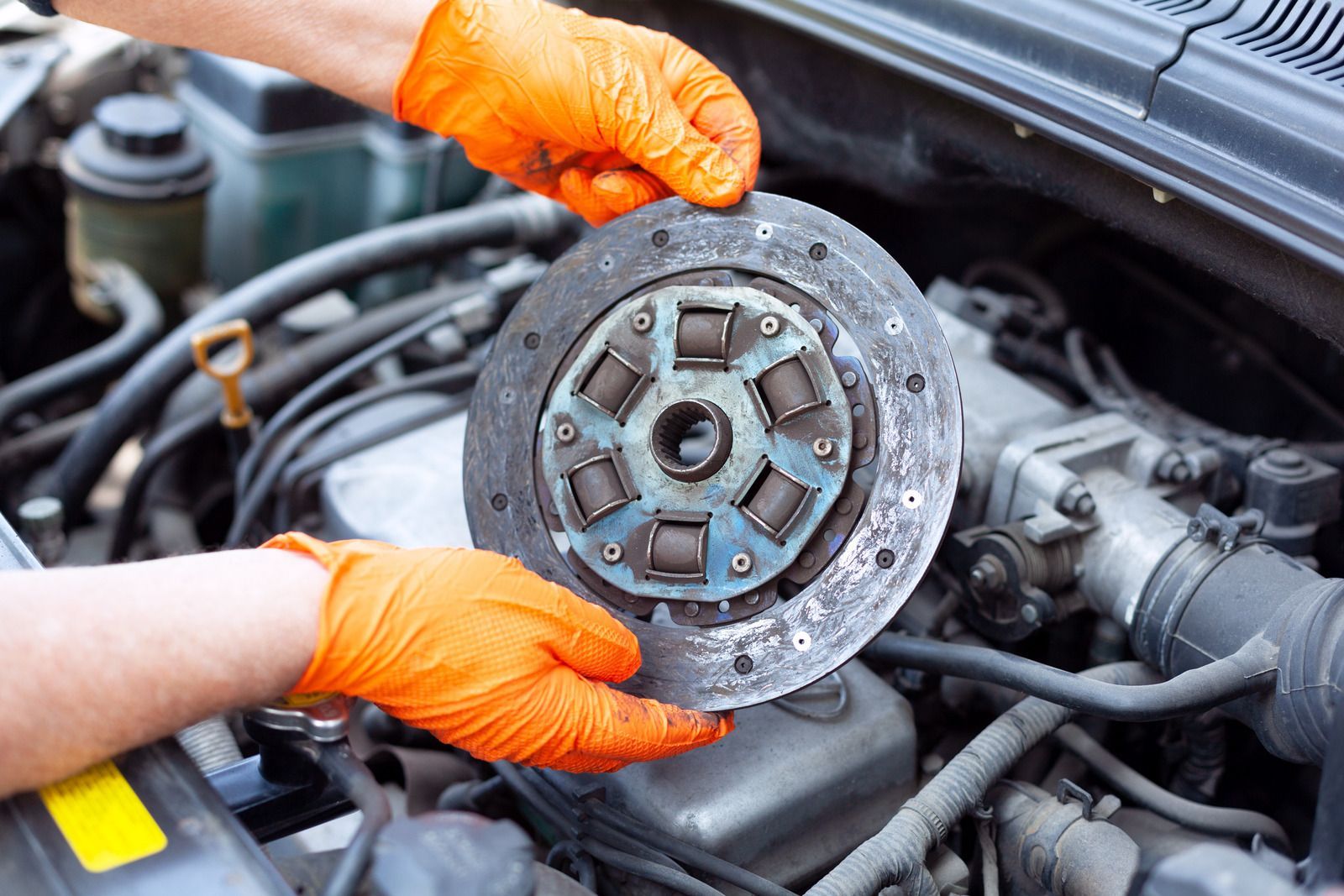
CLUTCH CHECK
Manual Clutch Inspection And Advice
Pedal free play, engagement point, and slipping under acceleration tell us how much life a clutch has left. You get a straight answer on whether replacement is due now or can safely wait.

SPEC REPAIR
Repairs Matched To Manufacturer Specifications
Once the fault is confirmed, components come apart and go back together to the values your manufacturer publishes. Fluid type, fill quantity, and torque all follow the book, and the vehicle is retested.
THE WORD ON OUR WORK
WHAT OUR CLIENTS SAY.
Drivers tell us the same things: parts that arrived got installed the same day, work came back finished ahead of the estimated date, and more than one customer heard that a repair expected was not actually needed. Transmission customers get that same straight reporting.
Common Questions
frequently asked
questions.
Transmission questions come in every week, usually about fluid, noise, or a shift that does not feel right. Here are the ones drivers ask most, answered without sales pressure.
How often should transmission fluid be changed?
Most manufacturers set an interval in the owner's manual, and stop-and-go commuting shortens it. Condition matters more than mileage alone, so we check color and smell at every visit and recommend a change when the fluid tells us it is time.
Why does my transmission shift hard or hesitate?
Hard or delayed shifts usually trace to fluid condition, line pressure, or a solenoid that is not responding correctly. Worn internal clutches can produce the same feel, which is why we test pressure and watch live data before naming a repair.
Where do transmission leaks usually come from?
Pan gaskets, axle seals, the pump seal, and cooler lines are the usual sources. At M & A Auto Care in Pomona, CA we clean the area, add dye when needed, and drive the vehicle before pointing at any single part.
What does a transmission trouble code actually tell you?
A code names the circuit or the symptom the computer noticed, such as a gear ratio error or a solenoid performance fault. It does not name the failed part, so we confirm it with live data, pressure readings, and a road test.
How do I know when a manual clutch is worn out?
Engine speed rising without matching acceleration is the classic sign, along with a high engagement point, a shudder when pulling away, or a burning smell after a hill. Pedal free play and slip testing confirm how much material is left.
How long does a transmission repair take?
Minor repairs are often finished the same day, while a rebuild or a replacement can run a day or more depending on parts. We give you a timeline with the estimate so nothing about the schedule comes as a surprise.
Does hauling heavy loads wear out a transmission faster?
Yes. Heavy loads raise fluid temperature, and heat is the main enemy of fluid life. Drivers who haul regularly can ask M & A Auto Care in Pomona, CA about shorter fluid intervals and a cooler line inspection.
What happens if I keep driving a slipping transmission?
Slipping generates heat and metal debris, and both circulate through the fluid into valve bodies and clutch packs. A problem that started as a fluid or solenoid issue can turn into internal damage, which is why early testing usually saves the unit.
HOW WE WORK
HOW A TRANSMISSION JOB RUNS HERE.
STEP 01
Listen To The Complaint
You tell us what the vehicle does, when it does it, and whether it happens cold, hot, or only in heavy traffic. Every one of those details narrows the list before a single tool comes off the bench.
STEP 02
Check Fluid And Level
Fluid comes first because it is fast and it is honest. Color, smell, and level get compared against the manufacturer's specification, and anything burnt or metallic changes what we look at next and how urgent the repair becomes.
STEP 03
Pull And Interpret Codes
Scan results get recorded, cleared where appropriate, and then rechecked after a drive so we know which faults are current. Live data from the same session shows pressures and gear commands as the transmission actually works.
STEP 04
Inspect For Leaks
Seals, pan gasket, cooler lines, and the surrounding case get cleaned and examined under light. Dye goes in when a leak is slow, and the vehicle is driven again so the source shows itself instead of getting guessed at.
STEP 05
Explain Findings And Options
Before anything is approved, you get the findings in plain language, the repair options that fit them, a timeline, and a free written estimate. Nothing is opened, ordered, or drained until you have said go ahead.
STEP 06
Repair And Retest
Approved work goes back together to manufacturer specifications, with the correct fluid type and fill quantity. Then the same road test runs again, and the shift behavior you complained about gets checked against what it does now.